

Top 10 Digital Health Trends Shaping the U.S. Market in 2025–2026
Introduction
The U.S. healthcare system is entering a rare turning point — not because digital health is new, but because the forces shaping it have finally aligned with urgency. The U.S. digital health market is now evolving faster than at any point in the past decade, driven by regulatory clarity, investment shifts, and rising expectations.
After years of cautious adoption, three things are accelerating the transformation:
- AI in healthcare 2025 has matured enough to meaningfully augment clinical and operational workflows.
- Interoperability standards (FHIR R4/R5, USCDI+, SMART on FHIR, TEFCA) have moved into enforcement, not encouragement.
- Workforce shortages, rising costs, and a demand for hybrid, tech-enabled care are compelling modernization across care settings.
Healthcare spending is trending toward $6.2 trillion by 2028, but today’s digital shift is less about cost and more about velocity. Systems that once operated in silos must now deliver continuous, intelligent, data-driven care experiences.
This post outlines the Top 10 digital health trends shaping the U.S. market in 2025–2026, what they mean for providers, payers, MedTech vendors, innovators, and how organizations can prepare.
Market Snapshot: Why the Shift Is Accelerating Now

1. Market Growth & Investment
The U.S. digital health market exceeded $81 billion in 2023 and continues expanding at a double-digit CAGR. Investments now concentrate in:
- AI-powered clinical, RCM, and workflow solutions
- Hybrid care platforms
- Interoperability and clean data infrastructure
- Automation and intelligent orchestration
This signals a move away from point solutions toward scalable platforms designed for long-term viability — a pattern aligned with digital health trends U.S. 2025 expectations.
2. Regulatory Momentum
2025–2026 will bring some of the most transformative policy shifts in a decade:
- Information Blocking enforcement shaping how data must move
- FHIR R4/R5 becoming the default for FHIR interoperability healthcare
- USCDI+ and TEFCA enabling nationwide exchange
- CMS stabilizing telehealth, RPM, and digital care reimbursement
- FDA SaMD guidelines maturing pathways for AI/ML solutions and digital therapeutics
Regulation is no longer a barrier; it’s the accelerator for innovation — a defining element of digital health regulation U.S. conversations.
3. Macro Drivers Reshaping the Market
- An aging population requiring chronic care support
- Continued workforce shortages and clinical burnout
- Rising consumer expectations for hybrid and virtual options
- Increasing chronic disease and behavioral health needs
- Heightened concerns around cybersecurity and healthcare data privacy trends
4. What to Expect in 2025–2026
- AI copilots will be embedded directly into clinical encounters
- Data liquidity will define innovation speed
- Remote patient monitoring trends show RPM and home-based care growing faster than outpatient volumes
- Regulatory compliance becomes a competitive advantage
- Automation becomes the primary lever for cost containment
Key Trends Powering the Next Wave of Healthcare Innovation

Trend 1: AI & Generative AI Become Healthcare’s Intelligence Layer
AI is transitioning from experimentation to infrastructure. In 2025–2026, the biggest shifts in generative AI healthcare U.S. adoption will emerge in:
- Ambient clinical documentation
- Patient summarization across fragmented sources
- Coding accuracy and RCM automation
- Clinical deterioration prediction
- Intelligent triage and care navigation
Why It Matters
With workforce shortages and rising care complexity, AI in healthcare 2025 will serve as the intelligence layer filling operational and clinical gaps. Organizations investing in AI-ready architectures and governance today will lead tomorrow.
Trend 2: Remote Patient Monitoring Becomes Core Care Infrastructure
RPM is evolving from chronic care support to powering continuous, proactive care in the home. This aligns with the growing remote patient monitoring trend across U.S. providers and payers.
Growth Drivers
- Aging population
- CMS reimbursement stability for RPM/RTM
- Expansion of hospital-at-home and post-acute models
- Consumer adoption of home monitoring devices healthcare
Market Impact
Expect acceleration in:
- Unified RPM dashboards
- Condition-specific management pathways
- Prioritized clinical alerts
- FHIR-integrated device data streams
Trend 3: Telehealth & Hybrid Care Become the Norm
Telehealth is no longer a stopgap — it’s a core pillar of care delivery. Telehealth trends U.S. show adoption stabilizing at levels far above pre-pandemic use.
Hybrid care — the blend of in-person, virtual, and asynchronous — defines modern care delivery across:
- Primary care
- Behavioral health
- Chronic disease management
- Specialty consults
- Employer-sponsored programs
The next wave will integrate hybrid care model digital health workflows directly into EHRs, navigation tools, and self-service platforms.
Trend 4: Interoperability Moves from Compliance to Market Advantage
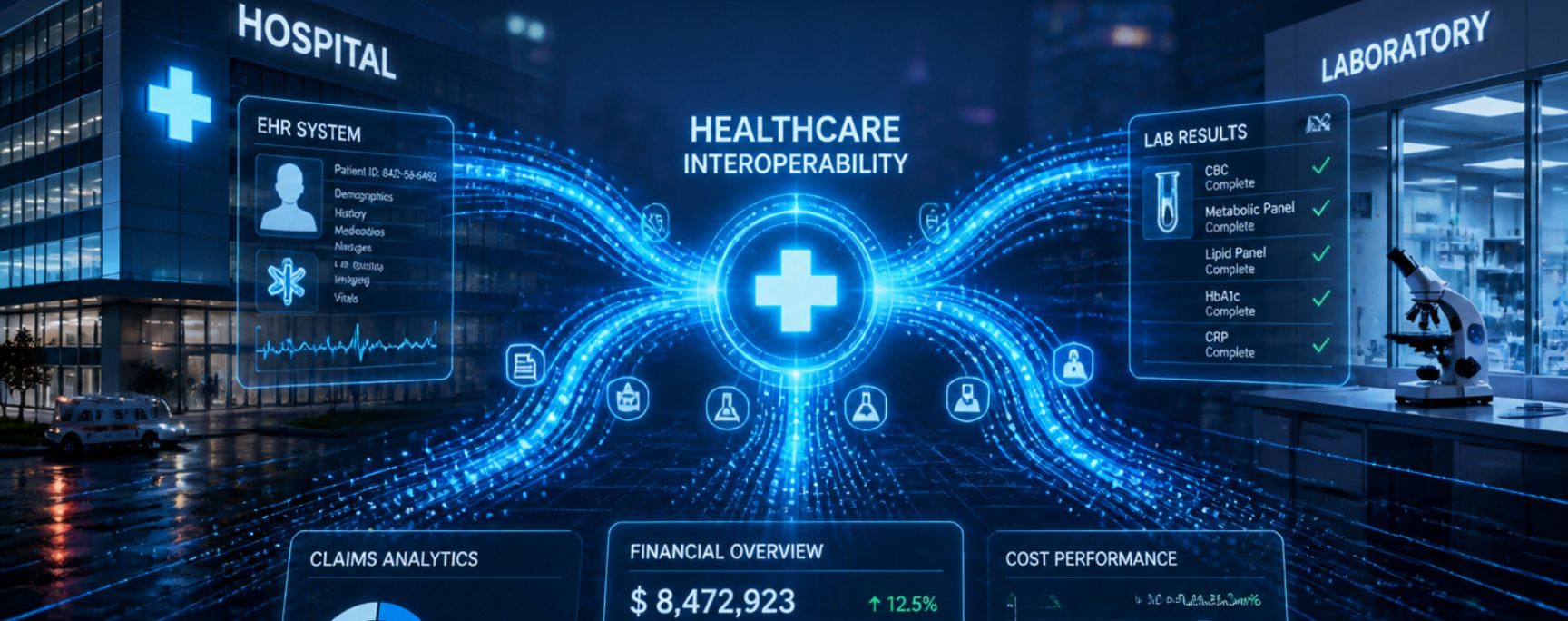
FHIR R4/R5, TEFCA, APIs, and USCDI+ are now the backbone of national data exchange.
Poor interoperability threatens:
- AI readiness
- Innovation velocity
- Care coordination
- Patient engagement
- Total cost of ownership
The shift toward cloud-native healthcare data platform trend 2025 architectures is becoming mandatory.
Where the Market Is Heading
- FHIR interoperability trends
- TEFCA-enabled networks
- Consolidated clinical + claims + device datasets
- Modern data lake houses built for healthcare
Build Interoperability That Scales with Your Enterprise
Unify data, accelerate AI readiness, and modernize your platform with FHIR- and TEFCA-aligned architectures.
Talk to Our ExpertsTrend 5: Wearables & IoMT Move from Wellness to Clinical Decision Support
With the highest global adoption rates, U.S. consumers are driving the wearables healthcare trend into clinical relevance.
Devices now play a role in:
- Early detection
- Medication adherence
- Longitudinal monitoring
- Employer/payer wellness incentive programs
- Real-world evidence generation
IoMT ecosystems will expand, reinforcing the Internet of Medical Things trend that connects sensors, apps, and clinical workflows.
Trend 6: Value-Based Care Accelerates Demand for Outcome-Driven Platforms
Value-based programs continue to expand across ACOs, MA plans, and risk-bearing specialty models.
Digital tools that support value-based care digital health strategies will reshape:
- Care gap identification
- Population health performance
- Risk prediction
- Automated outreach
- Contract performance
Outcome measurement will require outcome-driven healthcare technologies embedded into analytics and care pathways.
Trend 7: Cybersecurity & Digital Trust Become Non-Negotiable
Healthcare remains the most targeted sector, and with rising interoperability, risk grows exponentially.
Cyber defenses are now a board-level concern. The rise of cybersecurity healthcare digital initiatives will influence:
- Vendor selection
- Patient trust
- Insurance premiums
- Operational resilience
Organizations will double down on healthcare data privacy trend programs, SOC 2/ISO frameworks, and zero-trust identity architectures.
Trend 8: Regulatory & Reimbursement Shifts Reshape Digital Health Models
From FDA SaMD to CMS reimbursement boosts for digital care, organizations must navigate an evolving landscape defined by digital health regulation U.S.
Reimbursement innovation continues around:
- Telehealth
- Remote monitoring
- Chronic care management
- Digital therapeutics
Payers will reward solutions aligned with healthcare reimbursement digital services, making regulatory foresight a strategic advantage.
Trend 9: Personalized Medicine, Genomics & Digital Therapeutics Gain Traction
Precision care is entering mainstream adoption, backed by payer interest and falling genomic sequencing costs.
The digital therapeutics U.S. market is expanding toward integrated clinical pathways.
Opportunities ahead:
- Genomic interpretation platforms
- Personalized care engines
- Real-world evidence registries
This movement is shaping the future of personalized medicine digital health strategies across health systems.
Trend 10: Automation Becomes the Operational Backbone of Healthcare
No trend will impact financial performance more than automation.
The demand for healthcare workflow automation 2025 is accelerating in:
- Clinical documentation
- RCM and denial management
- Scheduling and throughput
- Supply chain and OR workflows
“Documentation automation healthcare” is becoming essential as organizations seek to relieve burnout and stabilize staffing models.
Here is a shorter, sharper, enterprise-focused closing section with subtle Dash positioning:
Shaping the Next Era of Digital Health
Healthcare is entering a decade where standards, intelligence, and automation will determine who leads and who lags. FHIR, TEFCA, USCDI+, and cloud-native architectures are becoming non-negotiable foundations. Real AI advantage will come from governed, interoperable data—not model choice. And as operational pressure intensifies, automation will be the most reliable path to stability and scale.
Forward-looking organizations are consolidating around platforms that can integrate, adapt, and support intelligence at enterprise speed. Decisions made over the next 3–5 years will define competitive positioning in the long term.
Where Leaders Must Focus Now
- Strengthen interoperability, compliance, and SaMD readiness
- Build AI governance and data quality into the core architecture
- Modernize security and reduce fragmentation across systems
- Enable hybrid care, automation, and analytics at scale
How Dash Helps Accelerate This Shift
Dash Technologies partners with enterprises to modernize platforms, unify data, and operationalize safe, standards-aligned AI. Our engineering and healthcare expertise help organizations reduce complexity, improve performance, and scale innovation with confidence.
The organizations that act with intention today will shape how U.S. healthcare is delivered and experienced tomorrow. The next decisions aren’t just technical—they’re strategic. Let’s connect and discuss your requirements
About Dash

Dash Technologies Inc.
We’re technology experts with a passion for bringing concepts to life. By leveraging a unique, consultative process and an agile development approach, we translate business challenges into technology solutions Get in touch.