Healthcare Organizations
Who Benefits from Radiology EHR Integration
Healthcare organizations have different imaging workflows, operational challenges, and interoperability requirements. Radiology integration helps create connected workflows regardless of organization size or specialty.
Hospitals & Health Systems
Connect radiology departments with enterprise EHR platforms, revenue cycle systems, specialty care teams, and imaging networks.
Imaging Centers
Automate scheduling, reporting, image management, and operational workflows to improve productivity and patient throughput.
Teleradiology Providers
Enable secure image exchange and remote diagnostic collaboration across distributed radiology teams.
Academic Medical Centers
Support enterprise imaging initiatives, research environments, and interdisciplinary collaboration.
Multi-Specialty Clinics
Provide seamless access to diagnostic imaging across orthopedic, oncology, cardiology, neurology, and primary care workflows.
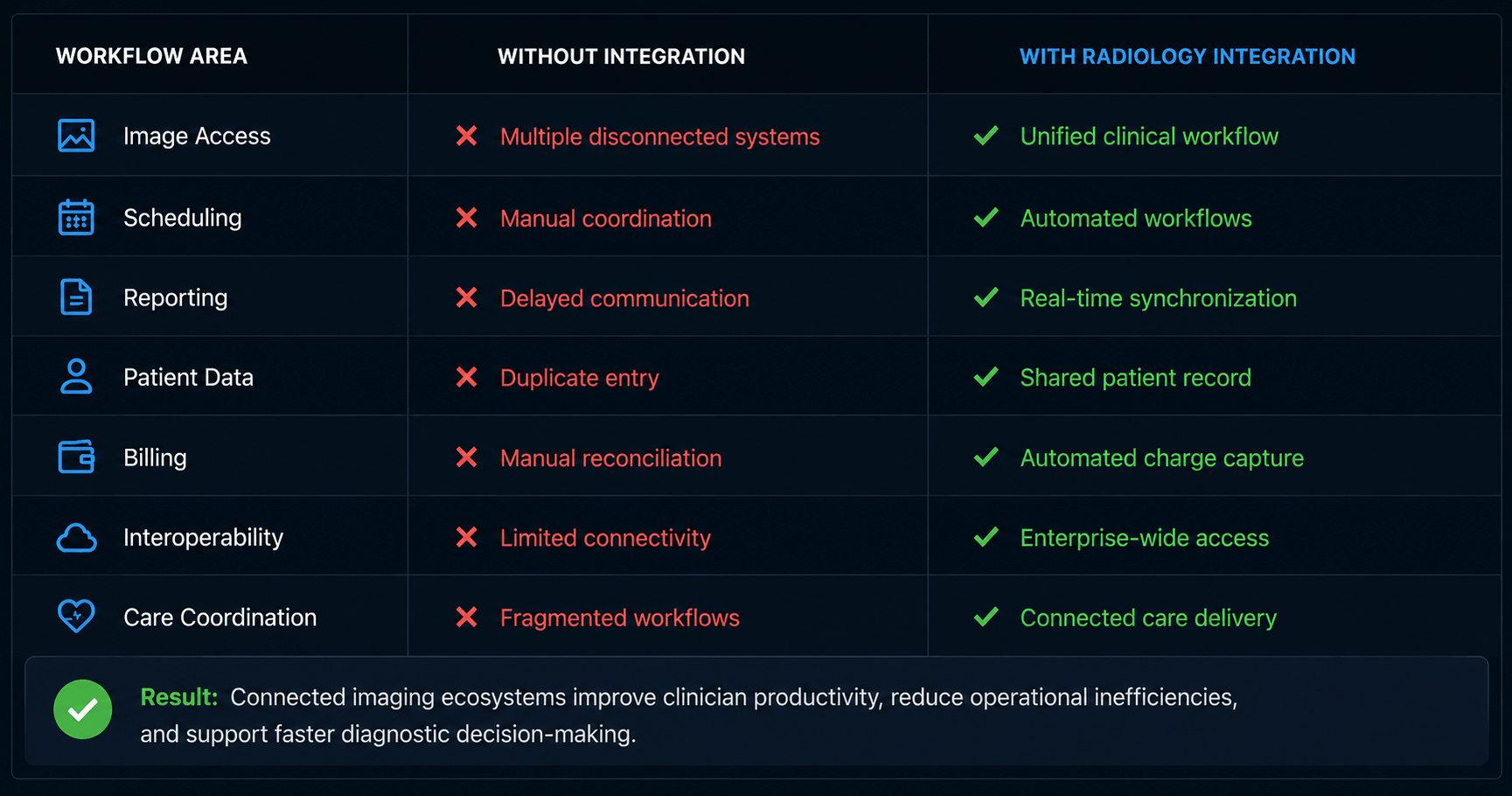
Before vs After
Manual Radiology Workflows vs Connected Imaging Workflows
Healthcare organizations often underestimate the impact of fragmented imaging systems on clinical efficiency and patient care.
PACS Integration
PACS ↔ EHR Integration Use Cases
Bring Diagnostic Imaging Directly Into Clinical Workflows
PACS and EHR integration is one of the most requested radiology modernization initiatives. Clinicians need immediate access to imaging studies without leaving patient records or navigating multiple applications.
Embedded Image Viewing
Allow physicians to access diagnostic images directly within EHR workflows.
Benefits :
Automated Report Synchronization
Ensure finalized imaging reports are automatically available within patient records.
Benefits :
Multi-Facility Image Sharing
Provide secure access to imaging studies across hospitals, imaging centers, and specialty clinics.
Benefits :
Connect Radiology Systems, Simplify Workflows
Integrate PACS, RIS, DICOM, and EHR platforms to improve interoperability and imaging access.
RIS Integration
RIS Integration Use Cases
Automate Radiology Operations from Order to Report
Radiology Information Systems coordinate scheduling, patient tracking, reporting, and operational workflows. Integrating RIS platforms with EHRs and imaging systems creates end-to-end workflow automation.
Order-to-Schedule Automation
Automatically create radiology appointments from physician orders, eliminating manual scheduling handoffs.
Worklist Management
Route studies to appropriate radiologists based on specialty, urgency, and workload distribution.
Automated Report Distribution
Deliver finalized reports directly to referring providers as soon as they are available.
Procedure Status Tracking
Provide real-time visibility into exam progress, workflow performance, and operational bottlenecks.
Outcomes :
Improved
Operational Efficiency
Reduced
Scheduling Errors
Faster
Turnaround Times
Enhanced
Patient Throughput
Integration Architecture
DICOM Integration Use Cases
Enable Imaging Interoperability Across Healthcare Systems
DICOM integration creates a standardized framework for exchanging medical imaging data across imaging devices, PACS platforms, and healthcare applications.
Multi-Vendor Imaging Connectivity
Connect CT, MRI, X-ray, Mammography, and Ultrasound systems across diverse vendor environments.
Vendor-Neutral Archive (VNA)
Centralize image storage while maintaining compatibility with multiple imaging platforms.
Teleradiology Workflows
Support secure image exchange and remote diagnostic review.
Cross-Enterprise Image Sharing
Enable imaging interoperability between hospitals, clinics, and healthcare partners.
Outcomes :
Improved
interoperability
Faster
image accessibility
Reduced
infrastructure complexity
Better
care coordination
Revenue Cycle Integration
Revenue Cycle & Radiology Integration Use Cases
Connect Imaging Operations to Financial Performance
Radiology services generate significant revenue, but disconnected workflows can lead to coding errors, missed charges, and reimbursement delays
Automated Charge Capture
Automatically generate charges from completed imaging procedures.
Coding Workflow Integration
Synchronize radiology reports with coding and billing systems.
Prior Authorization Tracking
Automate authorization management throughout imaging workflows.
Revenue Analytics
Combine clinical and financial data to improve visibility and reporting.
Modernize Your Radiology Workflows
Connect PACS, RIS, DICOM, and EHR systems for seamless interoperability.
Enterprise Platforms
Enterprise Imaging Integration Across Leading Healthcare Platforms
Epic Radiant Integration
Oracle Health Integration
GE Healthcare PACS Integration
Philips PACS Integration
Siemens Healthineers Integration
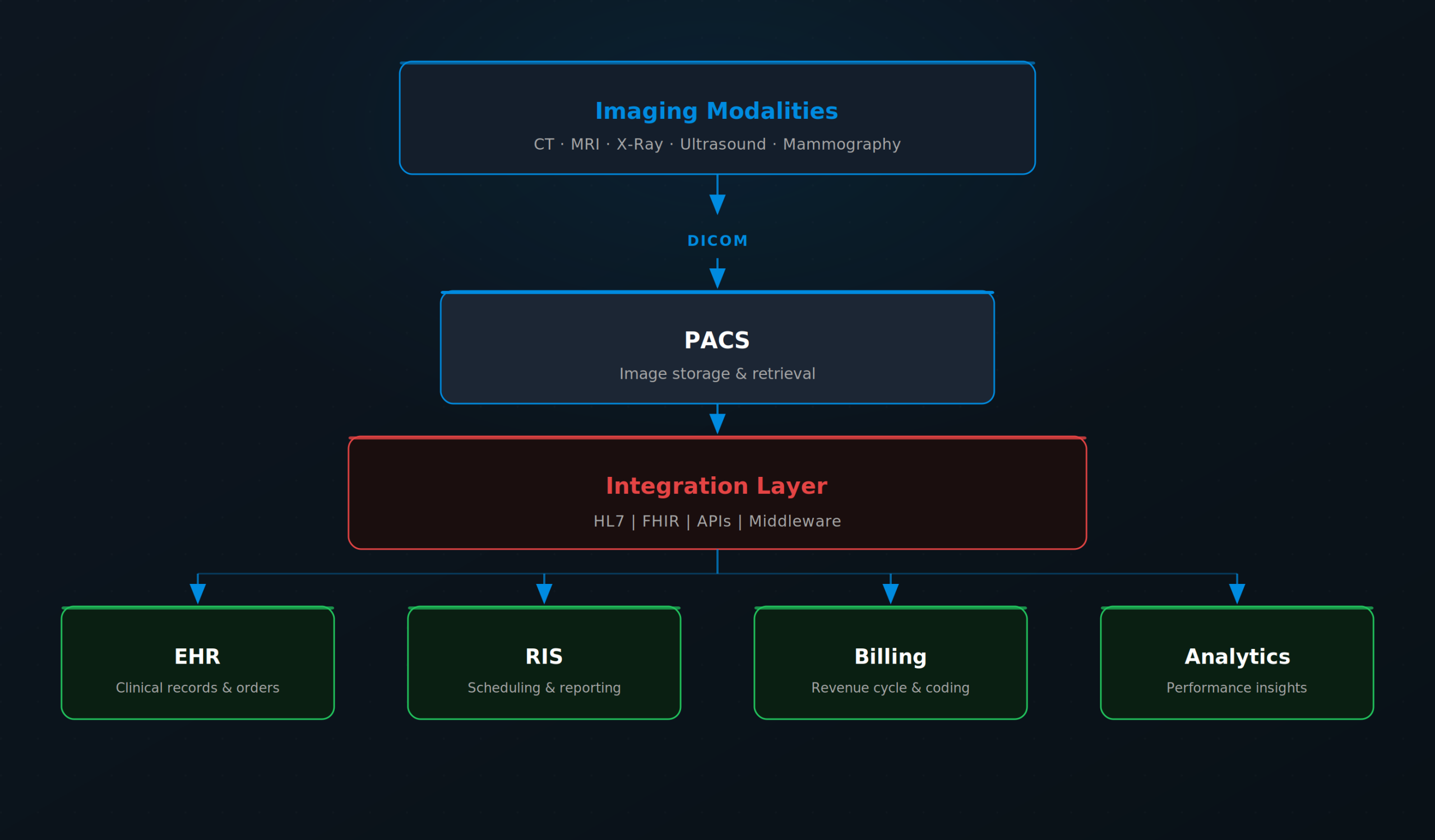
Integration Architecture
DASH: Transforming Radiology Operations
How Connected Imaging Ecosystems Operate
Why DASH
Why Healthcare Organizations Choose Dash Technologies
Radiology interoperability projects require expertise across healthcare workflows, imaging standards, enterprise architecture, and compliance requirements.
Our Expertise Enables:
Engagement Models
Integration Assessment
Not Sure Where Your Imaging Workflow Bottlenecks Exist?
Many healthcare organizations know interoperability challenges are limiting efficiency but struggle to identify where integration will deliver the greatest impact.
Our radiology integration specialists evaluate your current environment and provide actionable recommendations for improving connectivity across PACS, RIS, DICOM, EHR, and revenue cycle systems.
Included in the Assessment
Workflow Review
Integration Gap Analysis
Vendor Ecosystem Evaluation
Interoperability Assessment
Modernization Recommendations
Frequently Asked Questions
Radiology EHR integration connects PACS, RIS, imaging modalities, and diagnostic reporting systems with electronic health records to enable seamless data exchange, streamlined workflows, and improved access to imaging information across healthcare organizations.
PACS and EHR systems typically integrate using healthcare interoperability standards such as DICOM, HL7, FHIR, and APIs. This allows clinicians to access medical images, reports, and patient information directly within their clinical workflows.
PACS is primarily used to store, manage, and distribute medical images, while RIS manages radiology operations such as scheduling, patient tracking, reporting, and workflow coordination. Most healthcare organizations integrate both systems to create efficient imaging workflows.
Yes. Epic Radiant can integrate with a variety of PACS platforms using HL7, FHIR, DICOM, and custom API-based integrations. This enables organizations to connect imaging workflows, diagnostic reports, and enterprise imaging environments within Epic ecosystems.
Radiology workflow integration helps healthcare organizations improve image accessibility, accelerate report turnaround times, reduce manual data entry, enhance interoperability, support enterprise imaging initiatives, and improve overall operational efficiency.
