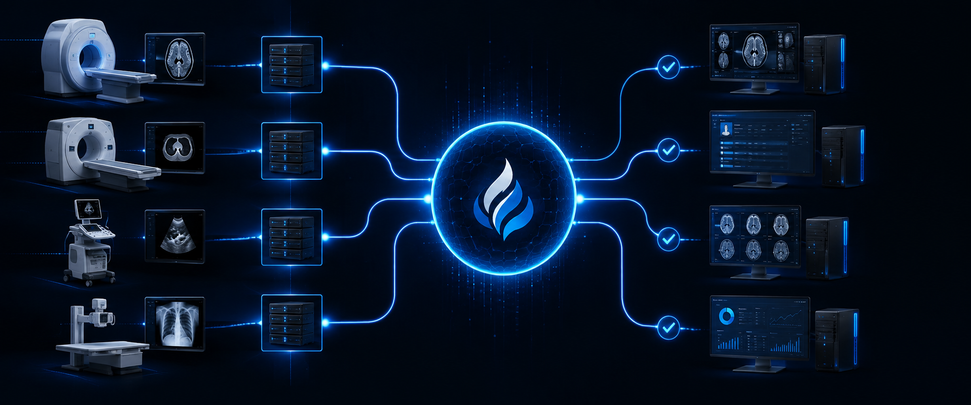
FHIR-Based Radiology Workflow: Eliminating Imaging Data Silos
A FHIR-based radiology workflow connects imaging systems that don’t communicate. This gap grows costlier each year. Radiology exam volume grew 31% between Q1 2018 and Q1 2024. The radiologist workforce grew 24% over the same stretch. That’s the mismatch, straight from a Journal of the American College of Radiology analysis of 46.4 million exams.
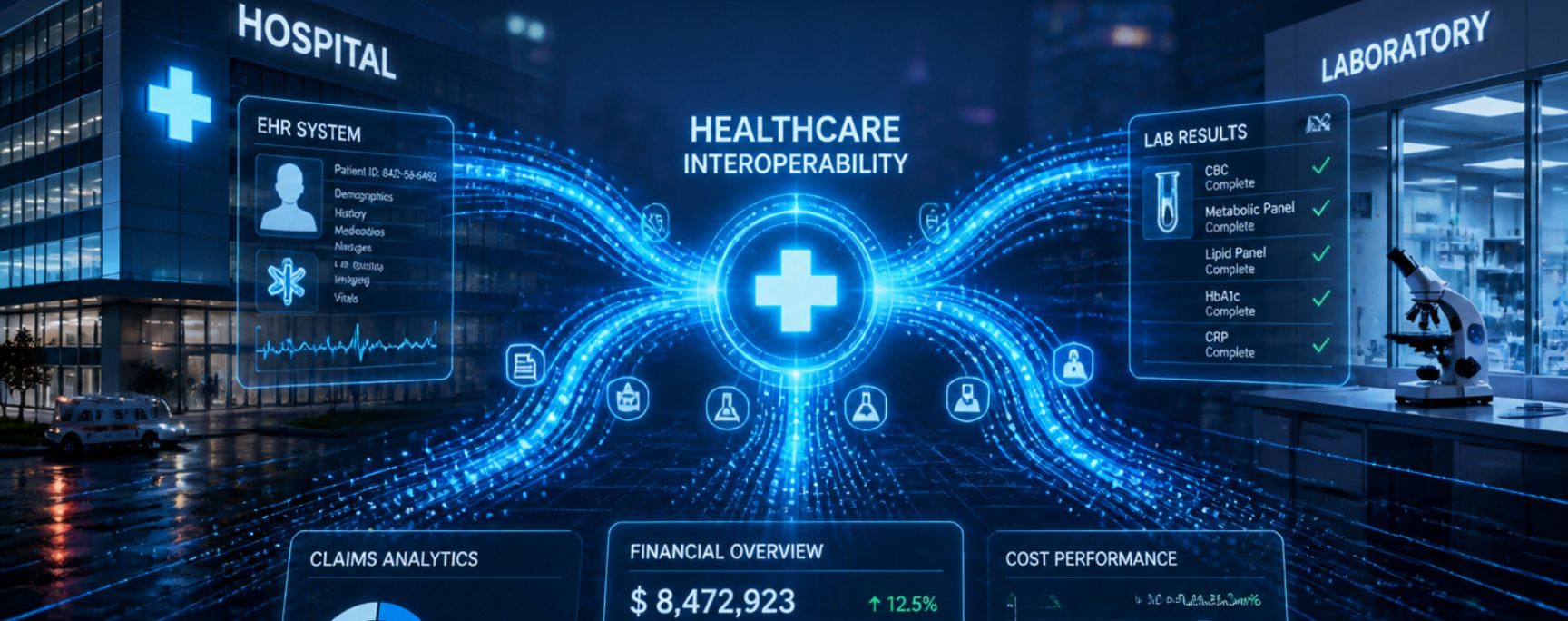
Meanwhile, the EHR, the PACS, and the RIS at most hospitals still run as three separate islands. A referring physician waits on a report that’s already finished. A technologist re-keys the same patient ID for the third time that morning. None of that is a staffing problem. It’s an interoperability problem. HL7’s Fast Healthcare Interoperability Resources (FHIR) standard is the fix: one standardized language for moving imaging data in real time. Radiology interoperability stops being an IT aspiration and becomes an operational requirement.
Why Imaging Data Silos Continue to Slow Radiology Workflows
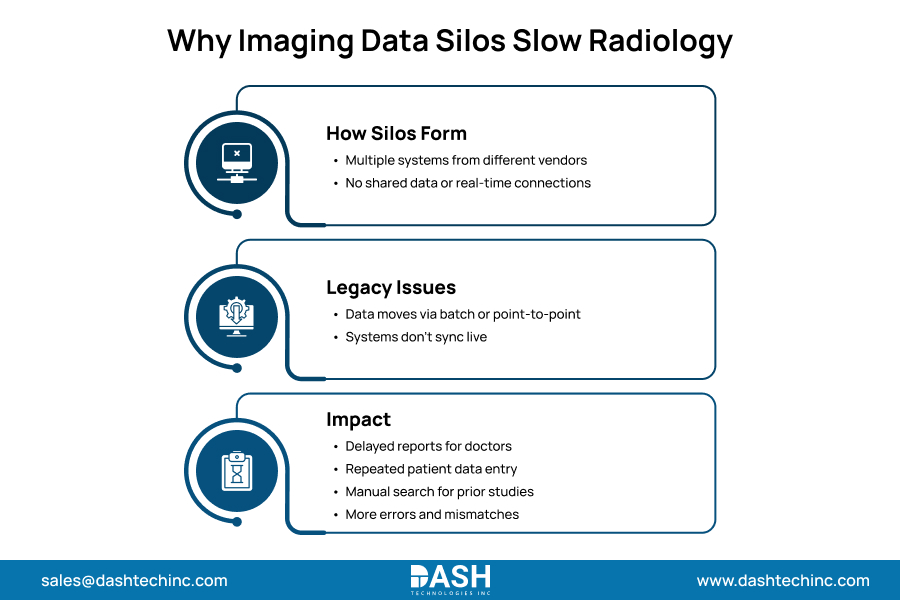
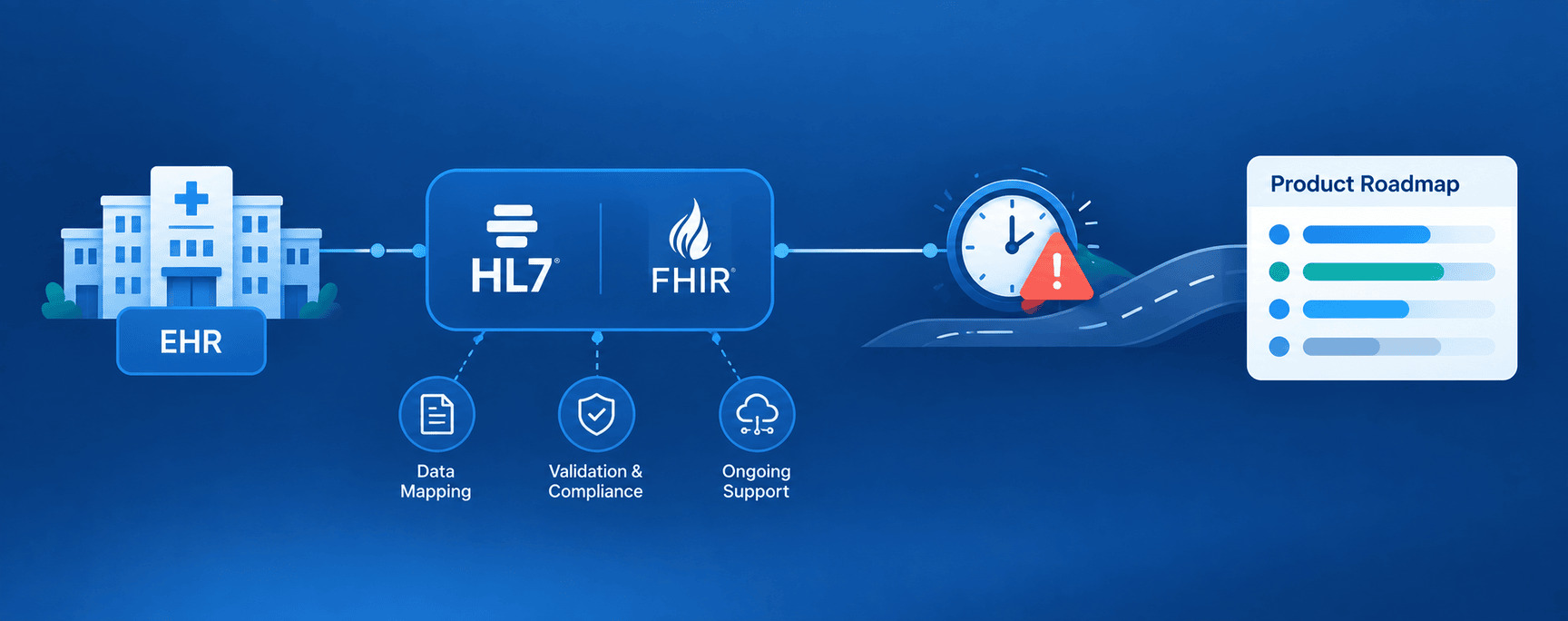
Healthcare data silos don’t appear overnight. A radiology department buys a new PACS in one budget cycle. It adds a specialty RIS a few years later. Then a cloud viewer gets layered on top after that, each from a different vendor, each on its own upgrade schedule. Nobody designed that stack to share data. It just grew that way, and now EHR, PACS, and RIS platforms sit on different release cycles with no shared data model connecting them.
Legacy imaging systems make it worse. Plenty of RIS and PACS installations still move data through point-to-point interfaces or overnight batch transfers, not live connections. The practical result:
Referring physicians wait hours, sometimes days, for reports that radiologists finished long before
Technologists re-enter patient demographics and order details across two or three systems for a single exam
Radiologists pull prior studies manually because the RIS and PACS don’t share a real-time view of patient history
Duplicate documentation multiplies the risk of transcription errors and mismatched records
Every gap on that list has a price. A referring physician makes a call without the full imaging picture. A radiologist burns ten minutes hunting for a prior study instead of reading the next case. Multiply that across a department, and no scheduling fix touches it. The real problem is imaging data integration, not the calendar.
How FHIR Improves Radiology Interoperability
FHIR fixes the issues discussed above. It swaps fragmented interfaces for one standardized, RESTful API layer. Every connected system reads and writes against it the same way; no more custom build for every PACS-EHR pairing. HL7’s FHIR specification defines shared resources. These include ImagingStudy, DiagnosticReport, and ServiceRequest. They carry imaging data in the same way. This is true no matter which vendor built the system.
In practice, a FHIR radiology integration moves through four handoffs. First, an order enters the RIS and becomes a FHIR ServiceRequest resource. Once the scanner finishes the study, the PACS registers it as an ImagingStudy resource. Next comes the report: the radiologist signs it, and it posts as a DiagnosticReport resource through the FHIR API. Last, the EHR pulls that resource in real time, landing the finalized report inside the chart the referring physician is already working in, not a separate portal.
Same visit, not the next morning. That single change ripples outward. Clinical decision support tools, patient portals, AI triage systems, they all query the same FHIR API for radiology data instead of needing a separate integration built for each one. This isn’t optional anymore, either. The ONC’s Cures Act Final Rule requires certified health IT to expose FHIR-based APIs. Healthcare imaging interoperability is a compliance line item now, not just an operational upgrade.
Ready to Connect Your Radiology Systems with FHIR?
Whether you're integrating your EHR, PACS, RIS, or other imaging applications, our interoperability experts can help you design a FHIR-based workflow that enables seamless, scalable data exchange across your radiology ecosystem.
Talk to Our Radiology Integration ExpertsBenefits of a FHIR-Based Radiology Workflow
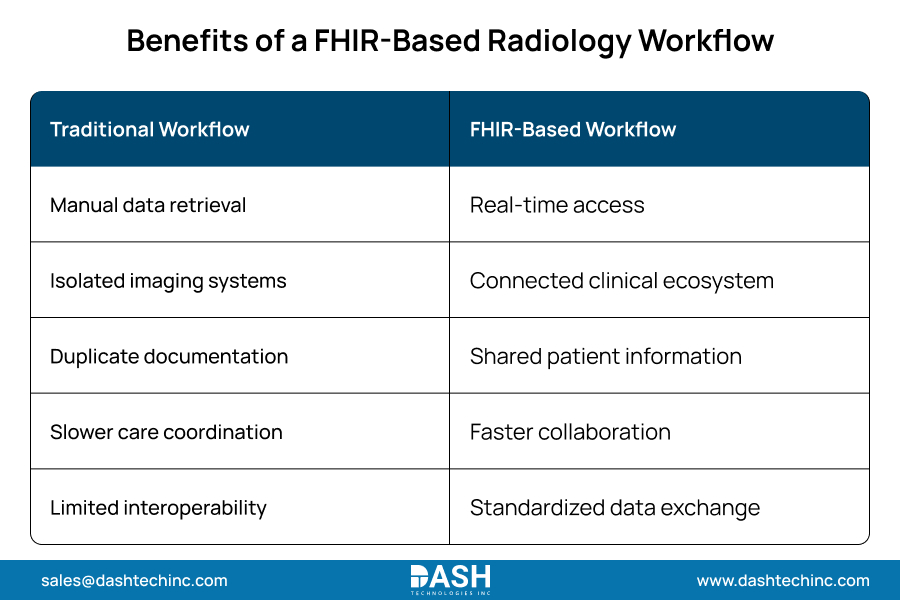
A connected radiology ecosystem changes what happens on the floor, not just what’s on the architecture diagram. Clinical imaging workflow speeds up because reports hit the EHR the second a radiologist signs off. Referring physicians work from today’s data, not yesterday’s email.
The operational gains add up fast. A referring physician sees the signed report immediately, no callback to radiology needed, which means faster clinical decisions across the board. Specialists, primary care, and radiology all read from the same imaging record instead of three different versions of the truth, and that alone makes care coordination easier. Radiologists experience this architectural shift directly, dedicating clinical hours entirely to diagnostic reading. Prior scans isolated in disconnected databases no longer require manual retrieval. Automated FHIR resource routing eliminates duplicate data entry across the core RIS, PACS, and EHR stack, structurally reducing administrative overhead. Scalability stops being its own project, because adding a new imaging center or modality means a radiology EHR integration built on FHIR just absorbs it. No rebuild.
Best Practices for Modernizing Radiology Workflows with FHIR
FHIR implementation in healthcare isn’t a single project, and radiology workflow optimization proves it. It’s a sequence. Execute the following as a strict implementation checklist:
Begin with a comprehensive gap assessment: Map every point-to-point interface across the EHR, PACS, and RIS architecture before writing any integration code.
Standardized APIs come first: Reserve custom interfaces for the rare system with no FHIR support at all.
Integrate incrementally: One modality, one facility, then the next. Validate each exchange before expanding.
Data mapping has to be consistent: Patient identifiers, order codes, and report formats need to match before go-live.
Performance monitoring starts on day one: Report turnaround time and API response times are the metrics that actually matter.
Scalability is a design decision: Build the FHIR layer for the specialties and partner facilities coming next year, not just the ones live today.
These FHIR integration best practices scale down to a single imaging center and up to a multi-hospital system, no changes needed. Skip the assessment step, though, and the rebuild comes fast. Usually inside two years, because the team mapped systems instead of mapping data.
How Dash Technologies Enables Connected Radiology Ecosystems
Dash Technologies builds these connected radiology ecosystems. We deliver it as one engagement, not three separate vendor contracts: radiology EHR integration, HL7 and FHIR interoperability, PACS and RIS integration, all under one roof.
EHR integration services, clinical workflow optimization, integration testing, post-launch support. We handle all of it, start to finish. If your team needs a partner who has already solved these radiology EHR integration use cases, the path to a live, standards-based deployment gets a lot shorter.
Conclusion
Eliminating imaging data silos takes more than connecting systems together. It takes standardized, real-time interoperability that every platform in the department depends on. That’s what FHIR provides: the foundation for a connected radiology ecosystem where clinicians get faster access to information, care teams collaborate instead of chasing each other for records, and the organization is ready for the next round of federal interoperability mandates instead of scrambling to catch up.
Health systems that put this off keep paying for it: slower diagnoses, heavier administrative load, frustrated clinicians. Contact Dashtech to build a FHIR-based radiology workflow that eliminates the silos for good.
Frequently Asked Questions
About Dash

Dash Technologies Inc.
We’re technology experts with a passion for bringing concepts to life. By leveraging a unique, consultative process and an agile development approach, we translate business challenges into technology solutions Get in touch.