Domain
ECG Interoperability
Services
- Healthcare interoperability consulting
- HL7 integration & messaging implementation
- DICOM data transformation & imaging integration
- Integration engine development (automation workflows)
- XML to HL7/DICOM data mapping & transformation
- EHR (Epic) system integration
Overview
The client required their ECG platform to transmit reports directly to hospital systems such as Epic and DICOM repositories. However, the platform generated ECG reports in XML format and lacked support for interoperability standards such as HL7 and DICOM, preventing seamless integration with hospital IT infrastructure.
Dash Technologies implemented a healthcare interoperability integration framework enabling ECG reports to be transmitted to Epic and DICOM systems using HL7 standards.

About the Client
The client develops an ECG diagnostic solution used by healthcare providers to capture and analyze cardiac data. Their platform enables clinicians to generate detailed ECG reports for cardiac diagnosis and monitoring.


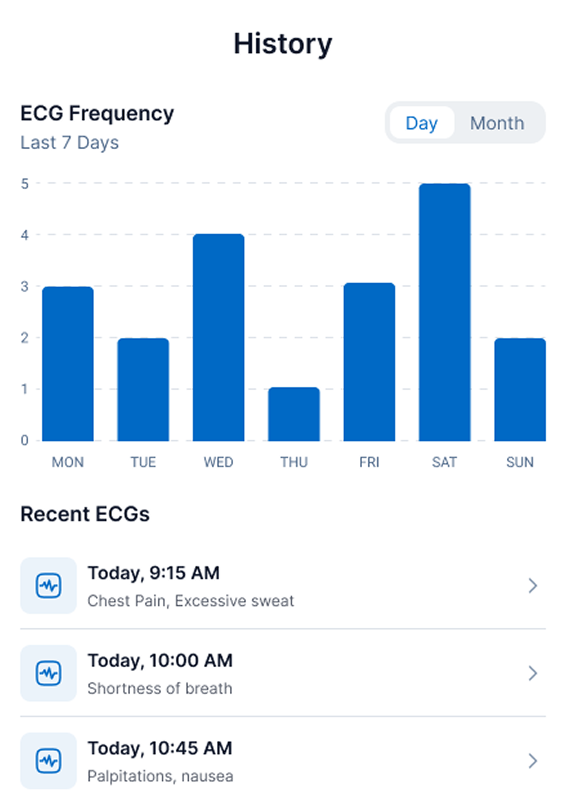
Eliminated 10–15 hours/week of manual effort with an event-driven ECG integration engine
Business Challenges
Although the ECG platform generated detailed cardiac diagnostic reports, it could not transmit them directly to hospital systems such as Epic or diagnostic repositories using DICOM standards. This created several operational and business challenges.
-
ECG Data Silos
Without interoperability support using HL7 and DICOM, ECG reports stayed within the diagnostic platform instead of becoming part of the hospital’s central patient record.
-
Delayed ECG reports
Manual ECG report workflows meant reports could take 30–45 minutes to appear in hospital systems, slowing access to critical cardiac diagnostic data.
-
Manual report sharing increased operational effort
Healthcare teams often had to export and transfer ECG reports manually. For hospitals performing 100–150 ECG tests per day, this could require 10–15 hours of administrative effort per week.
-
Higher integration effort for hospitals
Lack of HL7 and DICOM interoperability forced hospitals to build custom integrations—costing between $20,000 and $100,000.
Avoided $20K–$100K per integration by implementing a reusable HL7-DICOM interoperability framework

Our Solution - Enabling Standards- Based ECG Interoperability
To address the interoperability gap, Dash Technologies implemented a standards-based integration framework that enables the ECG platform to automatically transmit reports to hospital systems using HL7 and DICOM protocols.
Phase 1
Interoperability Mapping
Dash began by analyzing the ECG report structure generated by the diagnostic platform.
Since the system produced reports in XML format, the team mapped diagnostic data elements to healthcare standards to support HL7 ECG integration and downstream system compatibility.
Key activities included:
- Analyzing ECG report schema and waveform data
- Mapping XML report fields to HL7 message structures
- Designing DICOM-compatible formats for DICOM ECG data transformation
This ensured that ECG reports generated by the system could be translated into formats accepted by hospital IT infrastructure.
Phase 2
Integration Processing Engine
Dash then developed a background processing service responsible for managing ECG report transmission.
This service continuously monitors newly generated ECG reports and automatically initiates the integration workflow.
The engine performs several functions:
- Detects newly generated ECG reports
- Parses XML diagnostic data
- Triggers DICOM ECG data transformation and HL7 message creation
- Securely transmits reports to hospital systems
This automation eliminates manual workflows and ensures consistent report delivery.
Phase 3
HL7 and DICOM Transformation
A transformation layer was implemented to convert ECG reports into standardized healthcare messaging formats.
The integration framework generates:
- HL7 messages for Epic EHR integration and other hospital systems
- DICOM objects for storing diagnostic reports in imaging repositories
This enables ECG data to be automatically interpreted and archived within hospital environments.
Phase 4
Epic & DICOM System Integration
Once the transformation framework was established, Dash enabled seamless communication with hospital systems.
ECG reports generated by the diagnostic platform can now be transmitted to:
- Epic EHR integration, allowing clinicians to access reports within patient records
- DICOM servers, enabling long-term archival of diagnostic data
This approach ensures standards-based ECG interoperability, making diagnostic data accessible across the clinical ecosystem.
From isolated ECG reports to real-time clinical visibility —Dash turned data silos into connected care.
The Dash difference
By enabling standards-based interoperability using HL7 and DICOM , the ECG platform evolved from a standalone diagnostic system into an interoperable solution capable of transmitting reports directly to hospital systems such as Epic.
90%
reduction in manual ECG report handling workflows
75%
faster availability of ECG reports within hospital systems
10-15 hours
of administrative effort saved per week for hospitals performing 100–150
$20,000-$100,000
Reduced integration effort, avoiding custom interfaces that typically cost
Related Case Study
See all Case Studies
Have an Idea or Project? Let's Talk

Subscribe to Our Newsletter Here
Stay updated on the latest healthcare breakthroughs and research.
