Building an AI-Driven Healthcare Data Strategy
Healthcare organizations today are operating in a data-rich environment.
From electronic health records (EHRs) and clinical systems to connected medical devices and digital health platforms, the volume of healthcare data is growing at an unprecedented rate. However, despite this abundance of data, many healthcare organizations still struggle to transform it into actionable insights.
This challenge is particularly relevant for healthcare CIOs, CTOs, and digital health leaders, who are responsible for driving innovation while ensuring operational efficiency and regulatory compliance.
To address this gap, organizations are increasingly adopting AI-driven healthcare data strategies that combine real-world data (RWD) with advanced analytics capabilities.
These strategies enable healthcare systems to move beyond basic reporting and unlock predictive insights, operational intelligence, and improved patient outcomes.
Build a Data-Driven Healthcare Strategy
Discover how healthcare organizations are using real-world data and AI to unlock actionable insights and accelerate innovation.
Download the Strategy GuideThe Healthcare Data Challenge
Healthcare data is highly complex and fragmented.
Organizations must manage data across multiple systems, including:
- Electronic health records (EHRs)
- Imaging and diagnostic systems
- Claims and billing platforms
- Laboratory systems
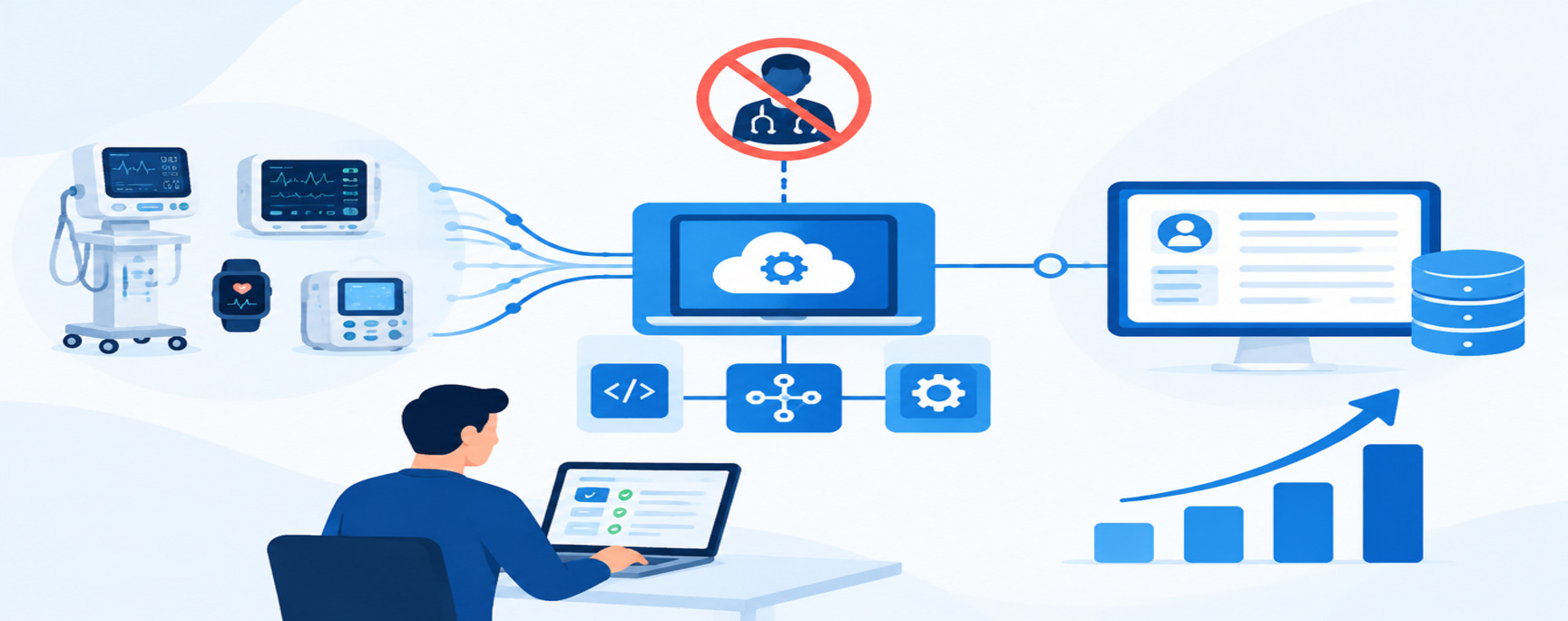
- Connected medical devices and wearables
- Remote patient monitoring tools
This fragmentation creates significant barriers to building a unified view of patient health and operational performance.
In many cases, healthcare organizations lack the infrastructure needed to integrate these data sources into a single, scalable environment. As a result, data remains siloed, limiting the effectiveness of healthcare data analytics and decision-making.
Additionally, data quality and standardization issues further complicate the ability to generate reliable insights from healthcare datasets.
Why AI Is Essential to Modern Healthcare Data Strategy?
Traditional analytics approaches are no longer sufficient to handle the scale and complexity of modern healthcare data.
Artificial intelligence plays a critical role in enabling healthcare organizations to process, analyze, and extract insights from large datasets.
AI technologies such as machine learning, natural language processing, and predictive analytics allow organizations to:
- Identify patterns across patient populations
- Predict disease risks and outcomes
- Support clinical decision-making
- Improve operational efficiency
- Analyze unstructured clinical data
When combined with real-world data healthcare analytics, AI enables organizations to generate deeper insights that support both clinical and business objectives.
For example, AI can analyze patient data to identify high-risk populations, optimize treatment plans, and improve care delivery outcomes.
Real-world data is a foundational component of any AI-driven healthcare strategy.
To understand how healthcare organizations generate insights from real-world evidence, read our related article: Why Real-World Evidence Is Transforming Healthcare Innovation
Key Components of a Modern Healthcare Data Strategy
Healthcare organizations that successfully implement AI-driven strategies focus on several core components.
- Unified Healthcare Data Platforms
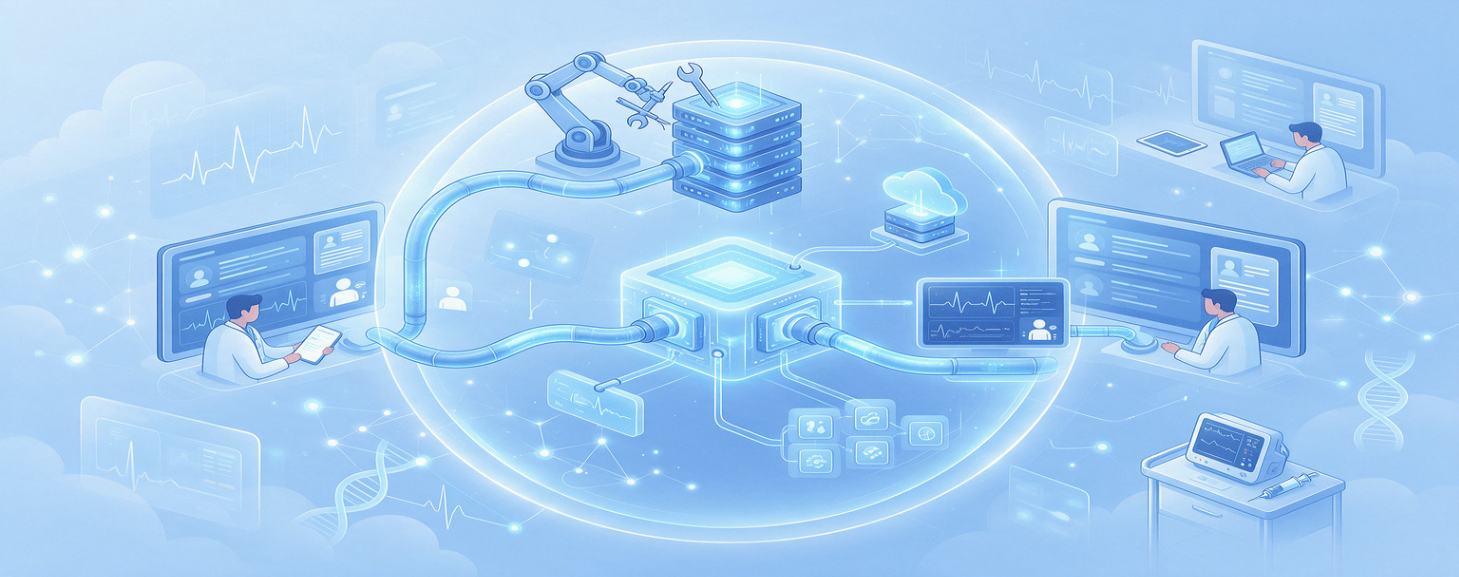
Modern healthcare data platforms integrate clinical, operational, and patient-generated data into centralized environments.
These platforms enable organizations to create comprehensive patient datasets and support scalable healthcare predictive analytics. - Interoperability Frameworks
Interoperability is essential for enabling seamless data exchange across healthcare systems.
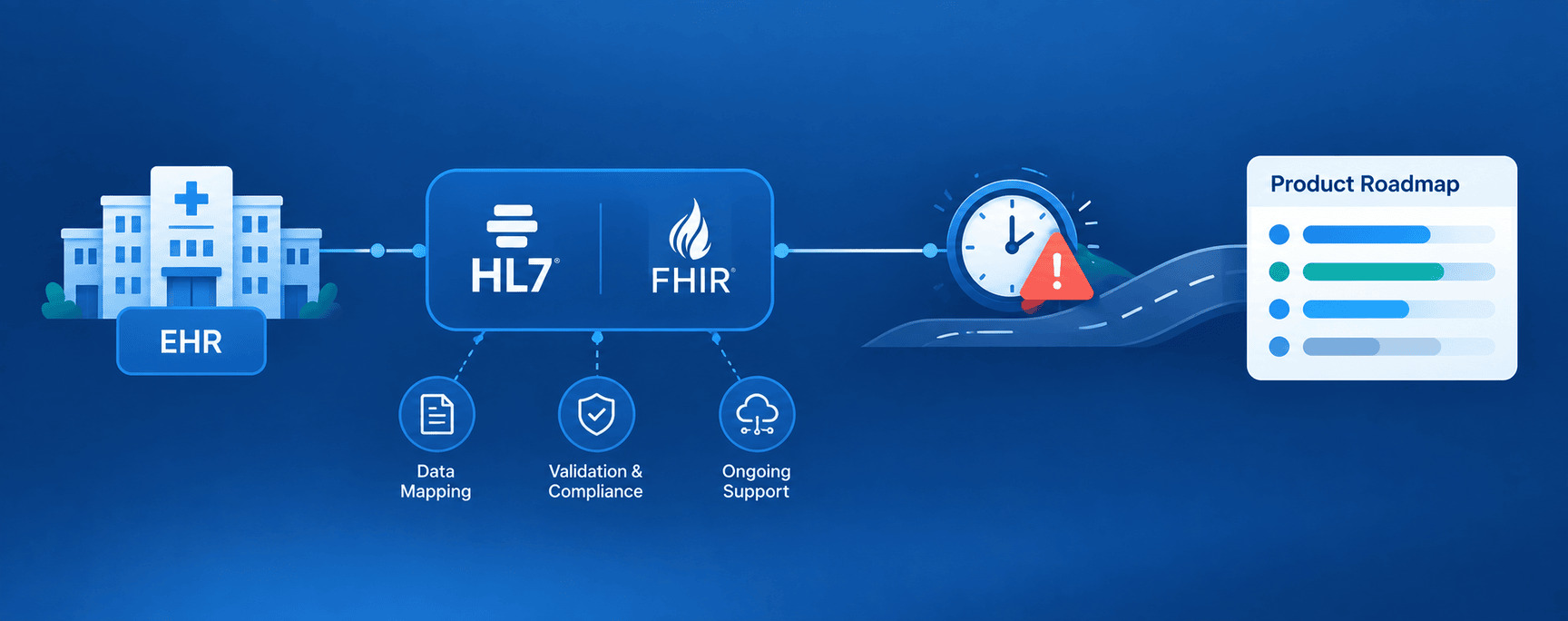
Standards such as FHIR APIs allow organizations to connect disparate systems and ensure that data flows efficiently across platforms.
This is critical for enabling real-world data integration and supporting AI-driven insights. - Advanced Analytics Infrastructure
Healthcare organizations must invest in infrastructure that supports advanced analytics, including machine learning and AI model deployment.
This enables organizations to move beyond descriptive analytics and adopt predictive and prescriptive analytics in healthcare. - Data Governance and Compliance
Strong data governance frameworks are essential for ensuring compliance with U.S. healthcare regulations such as HIPAA.
Organizations must establish policies for data privacy, security, and access management while maintaining high data quality standards.
Enable AI-Powered Healthcare Analytics
Explore how leading healthcare organizations are building scalable data platforms and AI capabilities.
Get the Healthcare Innovation GuideWhat Healthcare Organizations Should Do Next?
Healthcare leaders looking to build AI-driven data strategies should focus on the following priorities:
- Develop an Enterprise Data Strategy
Organizations must align data initiatives with broader business and innovation goals.
A well-defined strategy ensures that data investments support long-term growth and transformation. - Invest in Interoperable Data Infrastructure
Interoperability enables healthcare organizations to break down data silos and create unified data ecosystems.
This is essential for enabling AI in digital health innovation. - Integrate AI Into Healthcare Workflows
AI should be embedded into clinical, operational, and product development workflows rather than treated as a standalone initiative.
This ensures that insights generated by AI can drive real-world impact. - Prioritize Data Quality and Standardization
High-quality data is essential for effective AI models.
Organizations must focus on data normalization, validation, and governance to ensure reliable outcomes.
Build a Scalable Healthcare Data Strategy with AI
Healthcare organizations that successfully combine real-world data, AI, and modern data platforms are better positioned to drive innovation, improve patient outcomes, and optimize operational performance.
Our e-book provides a comprehensive roadmap for healthcare leaders looking to implement AI-driven data strategies.
Inside the guide, you’ll learn:
- How to build scalable healthcare data platforms
- Strategies for integrating AI into healthcare analytics
- Real-world data use cases across healthcare and medtech
- Frameworks for enabling data-driven healthcare innovation
Frequently Asked Questions
About Dash

Dash Technologies Inc.
We’re technology experts with a passion for bringing concepts to life. By leveraging a unique, consultative process and an agile development approach, we translate business challenges into technology solutions Get in touch.