Domain
Digital Health (Wound Care)
Services
- FHIR Integration
- EHR Integration
- HL7 to FHIR Integration
- Mirth Connect Development
- Integration Monitoring & Support
Overview
A healthcare technology company offering an AI-powered digital wound management platform needed to expand its EHR integration capabilities by introducing FHIR integration with eClinicalWorks while preserving the stability of its existing HL7 v2 interfaces. As its customer base grew, maintaining reliable healthcare interoperability across multiple EHR environments became increasingly complex. DASH partnered with the client to stabilize its live interoperability environment while engineering new FHIR-based connectivity. By combining continuous operational support with new integration development, DASH enabled seamless healthcare data exchange, accelerated future EHR onboarding, and established a scalable interoperability foundation for continued platform growth.

About the Client
The client is a healthcare technology company specializing in AI-powered digital wound management solutions. Its platform combines advanced imaging, automated wound measurements, analytics, reporting, and EHR integration to streamline clinical documentation, improve care coordination, and enable secure healthcare data exchange across diverse care settings.
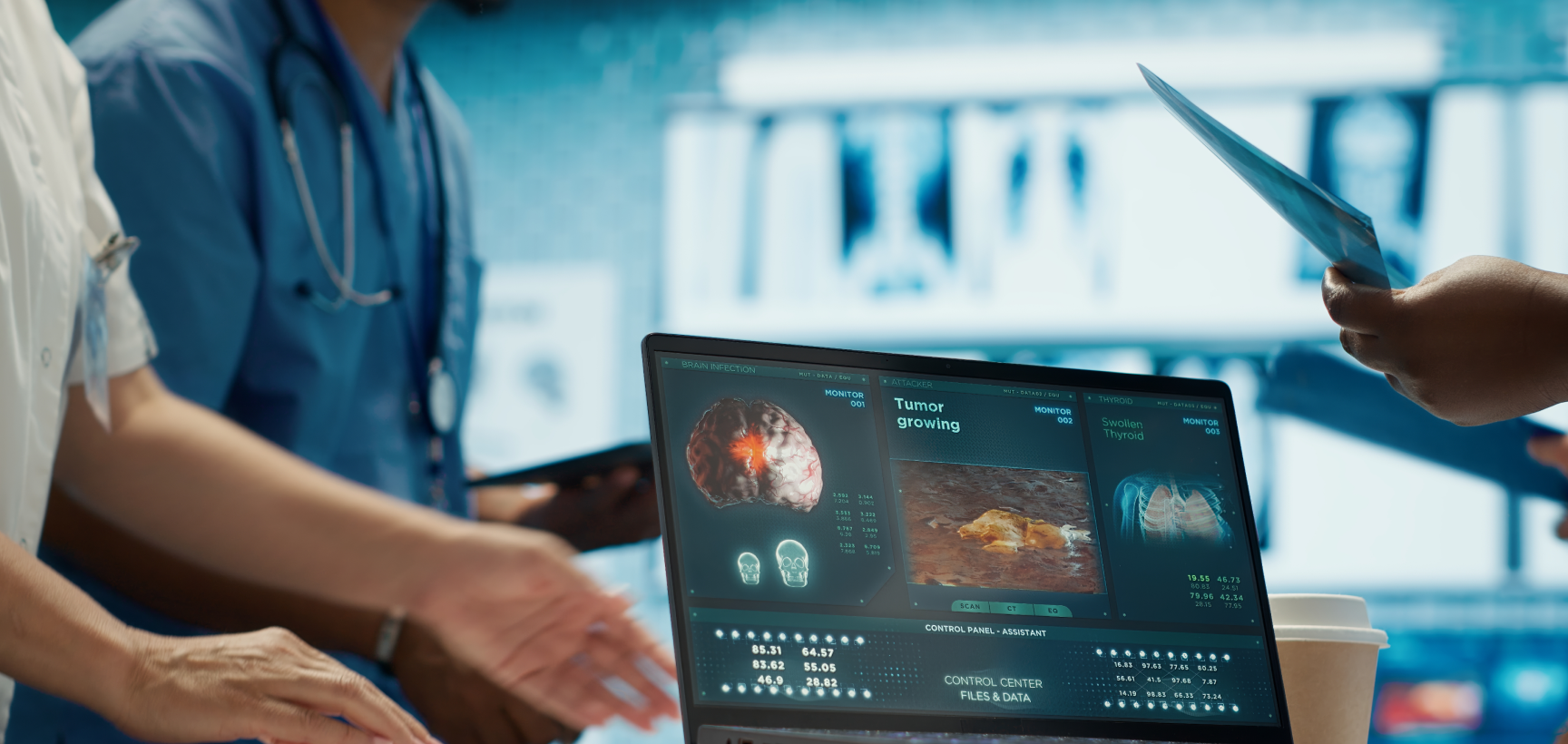
Expand EHR connectivity without risking the integrations already live
Business Challenges
-
Scaling EHR Integrations
As the platform expanded across healthcare organizations, supporting an increasing number of EHR integrations became more complex, extending implementation timelines and creating operational overhead.
-
Bridging HL7 v2 and FHIR
The client needed to modernize its interoperability strategy by introducing HL7 to FHIR integration without disrupting the existing HL7 v2 interfaces supporting production of clinical workflows.
-
Protecting Live Clinical Data Exchange
Existing integrations required continuous monitoring and maintenance to ensure uninterrupted clinical data exchange, minimize interface failures, and maintain production stability.
-
Supporting Future EHR Expansion
The client required a scalable interoperability model that could simplify future EHR onboarding, reduce custom development effort, and support additional provider environments.
Building Scalable Interoperability
DASH executed the engagement through two complementary workstreams—stabilizing the client’s production interoperability environment while engineering new FHIR integration capabilities. This approach ensured business continuity while enabling long-term interoperability growth.
Phase 1
Stabilize the Existing Integration Ecosystem
DASH established operational ownership of the client's Mirth Connect environment to ensure reliable performance across existing EHR integrations before introducing new capabilities.
- Documented the existing channel architecture, connector configurations, transformer logic, and end-to-end message flows across connected EHR systems.
- Evaluated active HL7 v2 interfaces, routing paths, and integration dependencies to strengthen overall healthcare interoperability.
- Continuously monitored interface health, message throughput, and error logs to maintain uninterrupted healthcare data exchange.
- Resolved production interface issues through transformer optimization, connector updates, root cause analysis, and message reprocessing.
A stable, continuously monitored interoperability environment that ensures reliable healthcare data exchange throughout the engagement.
Phase 2
Engineer and Operationalize FHIR Integrations
With the production environment stabilized, DASH expanded the platform's interoperability capabilities through standards-based FHIR integration.
The engine performs several functions:
- Designed and implemented an eClinicalWorks integration using FHIR APIs within Mirth Connect, configuring secure REST-based communication and authentication.
- Developed HL7 to FHIR integration logic by mapping FHIR resources to the platform’s internal data model while maintaining compatibility with existing HL7 workflows.
- Implemented validation, exception handling, and end-to-end testing to verify accurate and reliable clinical data exchange before production deployment.
- Established reusable channel configurations, mapping standards, and integration patterns to simplify future EHR onboarding and accelerate subsequent implementations.
A production-ready FHIR integration that expanded EHR connectivity while establishing a scalable framework for future interoperability initiatives, backed by ongoing monitoring and maintenance.
A reusable interoperability framework — not another one-off build.
Business Impact
DASH improved healthcare integration efficiency by standardizing deployments and enabling scalable hospital integration across diverse EMR environments.
Expanded healthcare interoperability without disrupting live clinical workflows or production interfaces.
Managed existing integrations while simultaneously delivering new FHIR capabilities
Applied deep HL7 to FHIR integration expertise to connect legacy interfaces with modern FHIR APIs.
Established reusable integration patterns to accelerate future EHR onboarding and simplify implementation.
Client Testimonials

The Dash team did an exceptional job and kept me involved at every stage, which was so important to me. Everyone, from the developers behind the scenes to the project team, played a critical role in bringing my app to life. I couldn’t be happier with my decision to partner with Dash and will continue working with them as the app grows nationwide.
- Kevin Unger | Experienced Medtech Executive & Entrepreneur
Related Case Study
See all Case Studies
Have an Idea or Project? Let's Talk
Subscribe to Our Newsletter Here
Stay updated on the latest healthcare breakthroughs and research.
