How EHR Systems Impact Hospital Efficiency and Where They Fall Short?
Centralizing patient information through EHR systems in healthcare serves as a necessity for clinical documentation. Yet, these platforms alone cannot optimize complex hospital operations. Facilities actively waste premium clinical bandwidth on manual workarounds, fragmented data reconciliation, and disconnected system delays despite exorbitant IT investments to increase hospital efficiency. Maximizing provider output requires leadership to look beyond basic data storage and execute strict integration across the entire facility technology ecosystem.
What EHR Systems Actually Do in Modern Hospitals?
At the core of EHR systems in healthcare is a transformative move from manual documentation to digital record-keeping. For providers, this healthcare data systems shift translates to less time spent logging patient information and more time devoted to their core mission: delivering quality care. By centralizing patient information and making it accessible across teams, EHRs facilitate collaboration and promote comprehensive patient management, especially when leveraging cloud-based EHR systems for seamless access and data sharing.
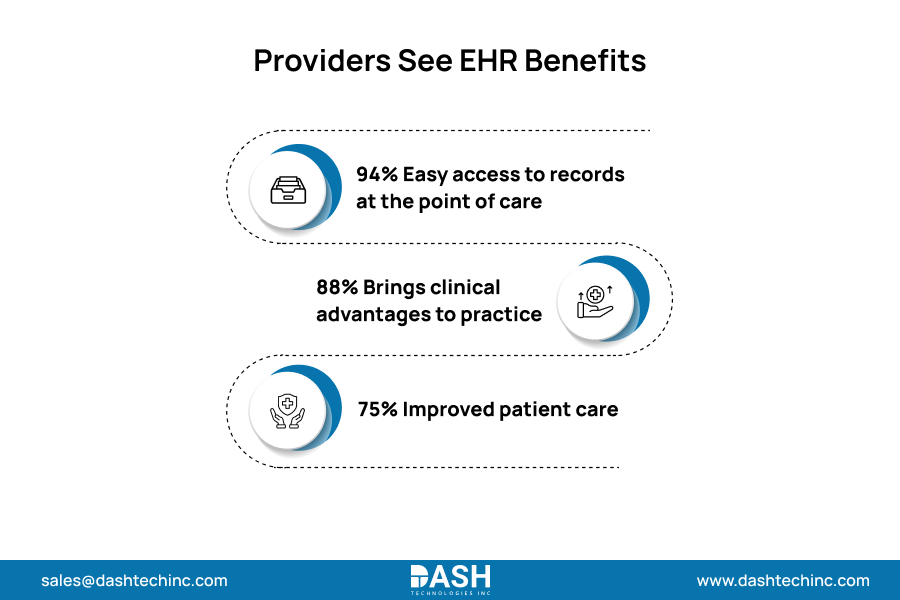
Research revealed the following facts:
- 94% of providers state that their EHR enables easy access to records at the point of care.
- 88% confirm that their EHR brings clinical advantages to their practice.
- 75% of providers say that their EHR helps them offer improved patient care.
Providers no longer need to sift through stacks of files; instead, EHR systems in healthcare provide a consolidated view of a patient’s medical history, lab results, medications, and treatment plans. This immediate access to relevant information enhances clinical decision-making, minimizes errors, and enables a proactive approach to patient health. From scheduling to follow-ups, EHR workflow improvements are designed to support providers at every stage, significantly enhancing efficiency in medical practices.
How EHR Systems Improve Hospital Efficiency?
Securing ROI from enterprise EHR platforms requires treating them as active operational engines rather than passive data repositories. Leveraging core EHR benefits healthcare drives four non-negotiable performance enhancements:
- Immediate Data Access: System-wide access to patient histories enables rapid diagnoses and eliminates the financial drain of duplicate testing.
- Algorithmic Safety Protocols: Clinical decision support tools automatically intercept fatal prescribing errors and allergy conflicts, actively protecting facility liability and baseline patient health.
- Synchronized Care Delivery: Shared digital records guarantee pristine clinical handoffs. High acuity patient data transfers seamlessly between specialty departments to permanently eliminate care fragmentation.
- Accelerated Documentation: Structured templates and voice recognition platforms drastically reduce charting burdens, directly increasing specialized physician bandwidth.
These structural advantages dictate baseline workflow efficiency. However, elite health systems recognize these capabilities as mere table stakes. Securing absolute operational dominance requires integrating the EHR seamlessly into the broader facility of the technology ecosystem.
Maximize ROI from Your Existing EHR
Discover how DASH helps healthcare teams eliminate gaps and drive measurable outcomes.
Talk to Our ExpertsWhere EHR Systems Fall Short in Real-World Operations?
Providers frequently encounter EHR challenges that create massive healthcare inefficiencies. Hospitals operate below peak potential because of specific technical roadblocks:
- Poor interoperability
Systems from different vendors often fail to exchange data, restricting information sharing outside the hospital’s specific network. - Data silos across departments
Specialized departments within the same hospital use isolated modules, preventing a unified patient view. - Workflow fragmentation
Clinicians navigate dozens of irrelevant screens or log into disparate applications to complete a single task. - Persistent manual processes
Poor data integration forces staff to print documents and manually enter data to bridge gaps between systems.
Read more about overcoming these hurdles in our Hospital Interoperability Challenges: Failures & Fixes & Data Analytics in Orthopedic Surgery
Why EHR Integration Matters More Than the EHR Itself?
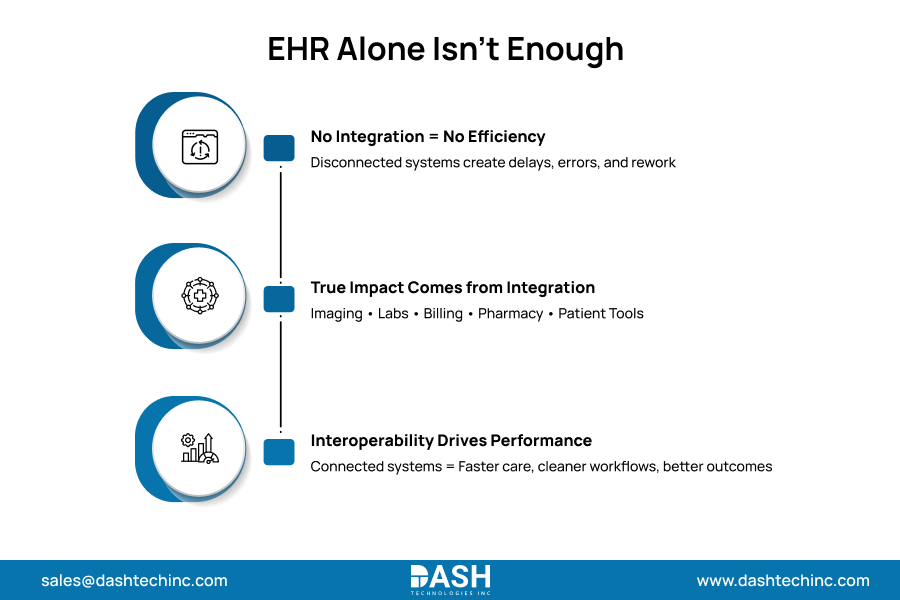
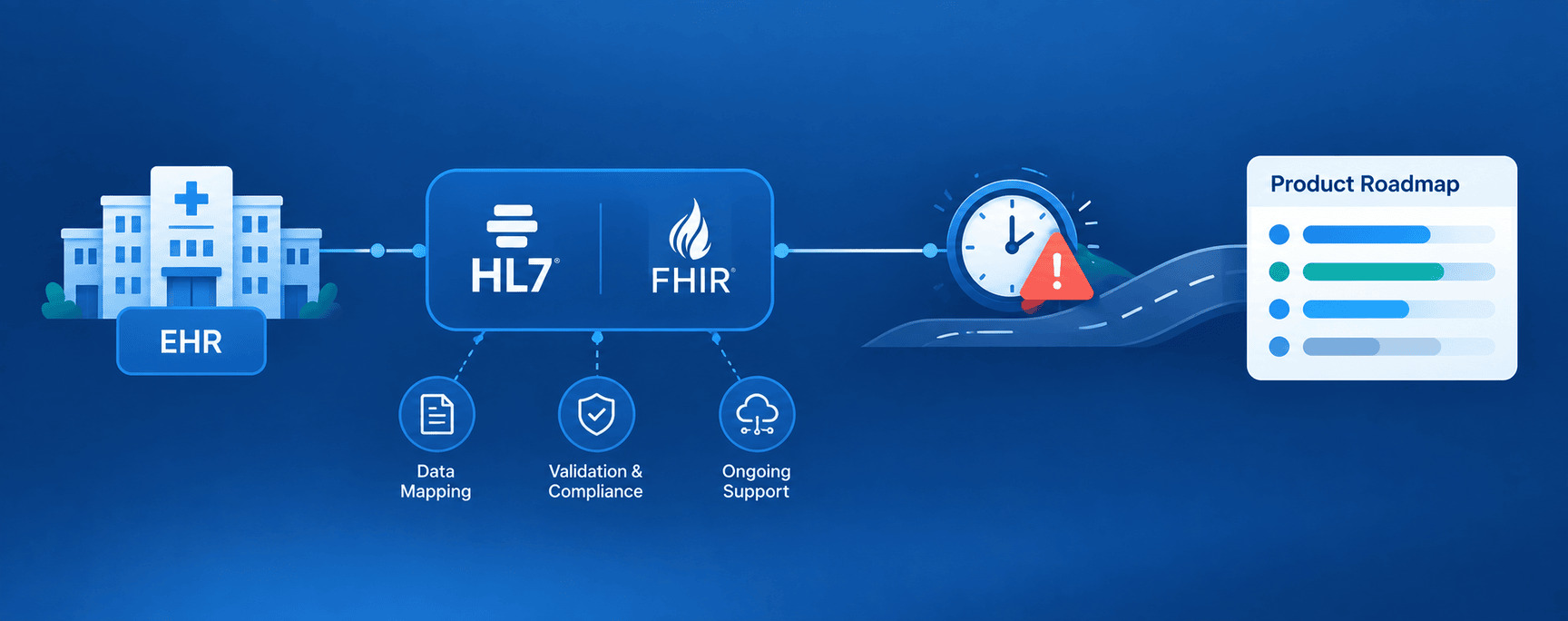
Hospital leadership must permanently abandon the misconception that the EHR functions as a complete operational system. It is merely a single node within a broader data architecture. Its absolute value is dictated entirely by its external connectivity.
Operating an EHR in isolation guarantees structural failure. Disconnected imaging systems force radiologists to transfer results manually. Siloed laboratory platforms require nursing staff to reenter existing data. Fractured billing connections force revenue cycle teams into endless manual reconciliation.
- Diagnostic Imaging: Direct PACS and RIS links for instant diagnostic visibility.
- Laboratory Information: LIS integration to completely eliminate manual result tracking.
- Revenue Cycle Management: RCM alignment for automated and pristine charge capture.
- Pharmacy Platforms: Strict synchronization for flawless medication dispensing and reconciliation.
- Patient Engagement Tools: Unified portals and telehealth systems to maintain coordinated care transitions.
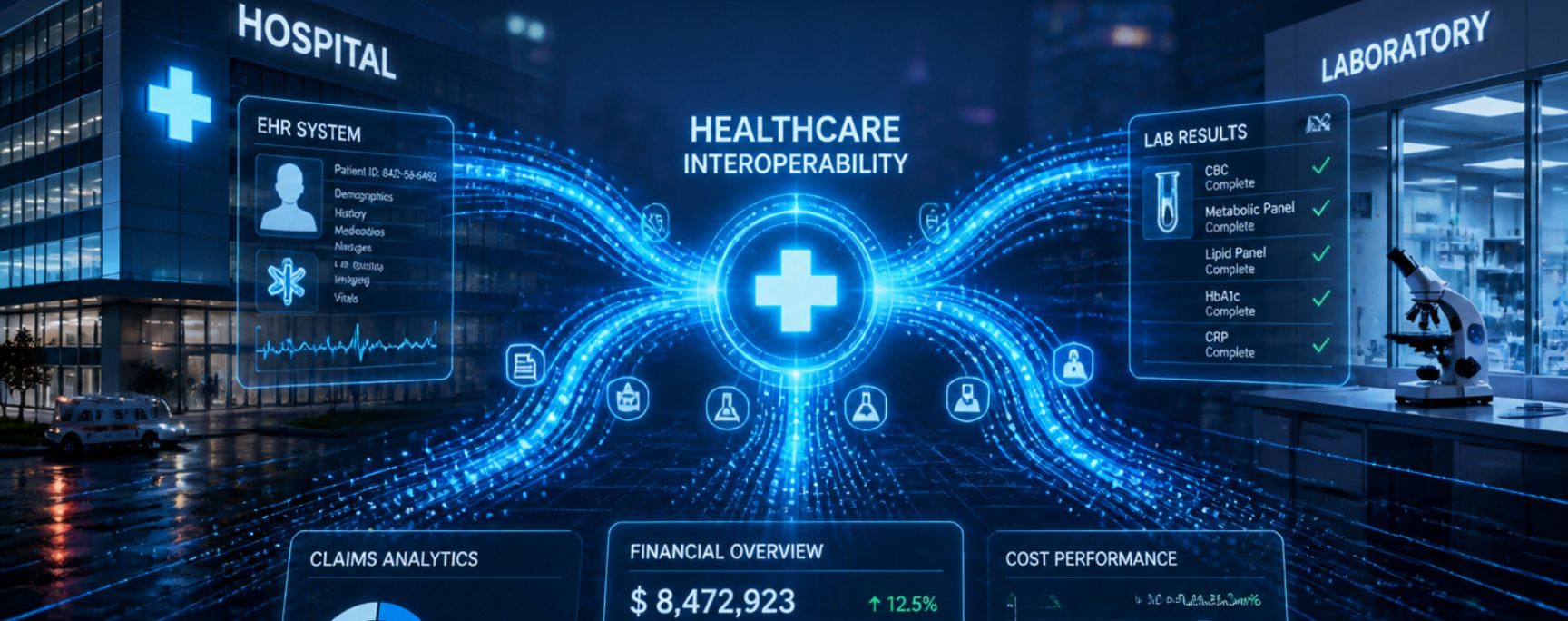
Healthcare interoperability provides the exact mechanism through which EHR systems deliver their efficiency promise. Without proper EHR integration, hospitals deploy expensive software that only replicates the fragmentation it was supposed to eliminate.
How Hospitals Can Maximize EHR Value?
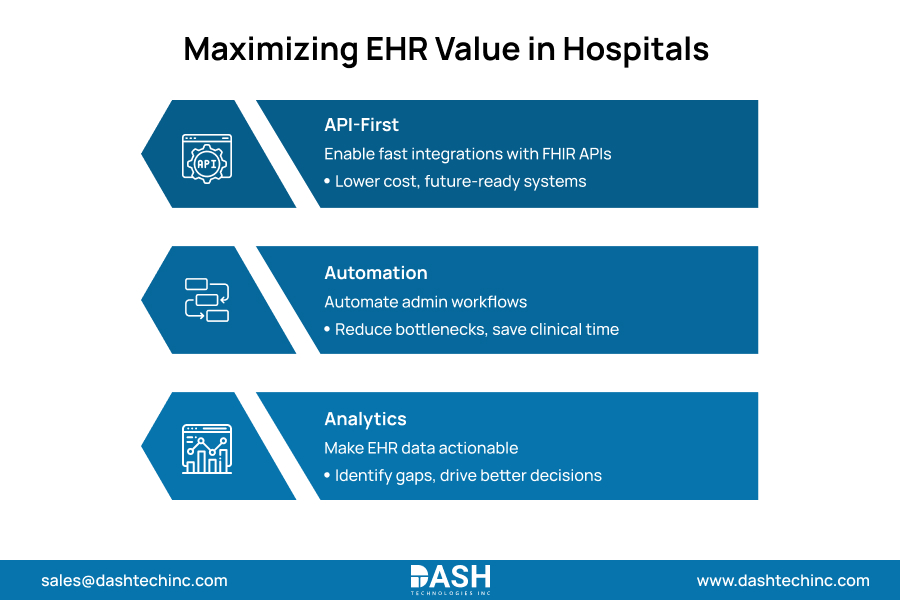
Extracting maximum ROI from existing platforms dictates executing a strict EHR optimization strategy instead of enduring costly system replacements. Leading hospital executives’ close systemic efficiency gaps by aggressively expanding the digital infrastructure surrounding their current foundational repository through three mandatory approaches:
- API First Architecture: Leveraging modern FHIR-compliant APIs allows for quick integration. This means you can connect immediately with specialized third-party clinical tools and patient engagement tools. Switching to a centralized API layer drastically lowers integration costs and ensures the enterprise data environment is future-proof.
- Strict Workflow Automation: Aggressively automating repetitive administrative functions like prior authorizations, referral routing, and result notifications permanently removes manual care delivery bottlenecks. Deploying precise workflow automation protects premium clinical bandwidth by eliminating operational friction entirely.
- Advanced Analytics Infrastructure: Unstructured EHR data provides zero operational value. Implementing a dedicated analytics layer guarantees total data visibility, equipping clinical leaders with the exact metrics required to pinpoint severe bottlenecks and drive continuous evidence-based workflow optimization.
How Healthcare Providers Are Solving This Today?
Waiting for EHR vendors to patch structural facility inefficiencies guarantees operational failure. Top-tier organizations proactively deploy integrated healthcare IT solutions to fuse foundational data directly with their broader clinical and financial operations. This aggressive deployment relies on three core pillars:
The approach typically involves:
- Absolute Data Centralization: Best provider systems reject fragmented departmental storage. By establishing a singular source of truth, executives guarantee seamless data fluidity across every department and specialized care setting.
- Clinical Platform Synchronization: Connecting foundational EHR records directly to advanced imaging, laboratory, and pharmacy systems through rigorous standardized protocols completely eradicates the manual data transfers that destroy operational efficiency.
- Instant Analytics Visibility: Leveraging advanced dashboards to expose exact utilization of metrics and hidden care gaps equips administrators with the operational foresight required to intercept severe bottlenecks instantly.
These exact models are fully operational today. Leading health systems recognize that achieving total clinical efficiency is a strict strategic mandate, permanently moving beyond the limitations of basic IT department decision-making.
Conclusion
The EHR provides mandatory infrastructure for digital healthcare, but it fundamentally fails as a standalone operational solution. True facility efficiency relies entirely on deploying seamless system integration and executing advanced intelligent automation. By forcing strict data connectivity across the entire digital ecosystem, executive leadership directly eliminates systemic clinician burnout and secures absolute excellence in patient care.
Explore how providers are modernizing EHR ecosystems for better efficiency! → Let’s Talk
Frequently Asked Questions
About Dash

Dash Technologies Inc.
We’re technology experts with a passion for bringing concepts to life. By leveraging a unique, consultative process and an agile development approach, we translate business challenges into technology solutions Get in touch.