Enterprise Interoperability
Modern Ophthalmology Workflows Depend on Seamless Interoperability
As healthcare organizations modernize eye care infrastructure, ophthalmology workflows must support faster diagnostics, connected care delivery, and enterprise-wide interoperability. Yet many ophthalmology practices and healthcare organizations still operate across fragmented systems that slow clinical and operational workflows.
Ophthalmology EHR integration connects ophthalmic imaging systems, diagnostic devices, clinical applications, and enterprise healthcare platforms to create unified, data-driven eye care ecosystems.
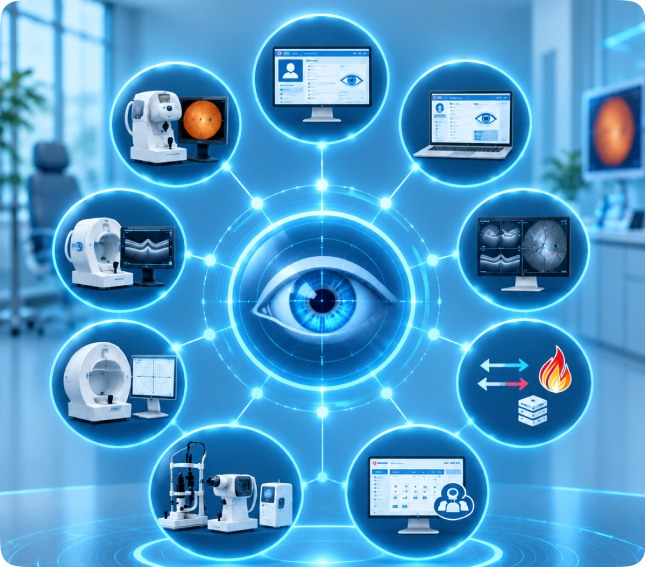
Modern ophthalmology ecosystems often require interoperability across:
Ophthalmology EHR systems
Ophthalmology EMR platforms
OCT and retinal imaging systems
Fundus photography systems
Visual field analyzers
Ophthalmic diagnostic devices
Practice management platforms
HL7 and FHIR interfaces
DICOM-enabled imaging systems
What is Ophthalmology EHR Integration?
Ophthalmology EHR integration connects ophthalmology EHR platforms, ophthalmic imaging systems, diagnostic devices, and clinical applications with enterprise healthcare systems.
Unlike standard healthcare integrations, ophthalmology interoperability must support specialized eye care workflows, diagnostic measurements, imaging data, clinical documentation, and healthcare standards including HL7, FHIR, and DICOM.
The objective is to enable seamless exchange of patient information, orders, diagnostic results, images, clinical reports, and other ophthalmic data across healthcare systems.
Integrated ophthalmology ecosystems help organizations:
- Improve diagnostic efficiency
- Accelerate clinical workflows
- Reduce manual data entry
- Enhance care team collaboration
- Improve ophthalmic data accessibility
- Support connected eye care
How Connected Ophthalmology Workflows Operate
Patient & Order Management
Physicians create ophthalmology orders and manage patient information directly within EHR workflows.
Scheduling & Workflow Coordination
Ophthalmology systems manage appointments, patient tracking, diagnostic orders, and clinical workflows.
Diagnostic Testing & Imaging
OCT, fundus cameras, visual field analyzers, and other ophthalmic devices generate diagnostic data.
Ophthalmic Data Management
Imaging systems and clinical applications organize diagnostic images, measurements, and patient information.
Ophthalmologist Reporting
Ophthalmologists review diagnostic findings, images, measurements, and generate clinical reports.
EHR Synchronization
Reports, diagnostic results, images, and relevant ophthalmic data are synchronized with enterprise EHR platforms.
Integration Challenges
Common Ophthalmology Integration Challenges
Disconnected Ophthalmology Systems
Clinicians often switch between EHR, imaging, diagnostic, and practice management systems to access complete patient information.
Fragmented Diagnostic Data
Ophthalmic images, measurements, and diagnostic results can remain distributed across specialized systems.
Manual Data Entry
Eye care teams frequently duplicate patient, appointment, diagnostic, and clinical information across systems.
Limited Interoperability
Legacy ophthalmic devices may use proprietary interfaces or lack modern interoperability capabilities.
Imaging Workflow Gaps
Disconnected imaging systems can make ophthalmic images and diagnostic information difficult to access within clinical workflows.
Workflow Inefficiencies
Manual processes increase administrative overhead and slow ophthalmology operations.
Transform Complex Ophthalmology Systems into Connected Eye Care Workflows
Bridge ophthalmology EHR, imaging, diagnostic devices, and clinical platforms to reduce workflow bottlenecks, improve interoperability, and accelerate access to ophthalmic data across care teams.
Core Capabilities
Core Components of Ophthalmology Interoperability
Ophthalmology EHR Integration
Ophthalmology EHR Integration
Connect ophthalmology EHR platforms with diagnostic, imaging, scheduling, and clinical applications.
Ophthalmic Imaging Integration
Ophthalmic Imaging Integration
Connect imaging platforms with EHRs and clinical workflows for accessible diagnostic information.
Ophthalmic Device Integration
Ophthalmic Device Integration
Enable data exchange between diagnostic devices and healthcare applications.
HL7 & FHIR Integration
HL7 & FHIR Integration
Enable healthcare data exchange across ophthalmology and enterprise systems.
By Specialty
Healthcare Environments Using Ophthalmology Integration
Healthcare workflows vary significantly across specialties. Our integration strategies are tailored to domain-specific requirements.
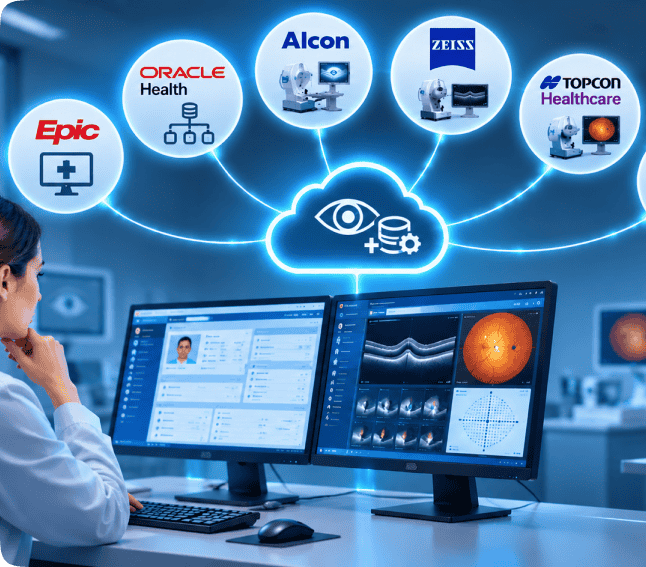
Enterprise Platforms Supporting Ophthalmology Interoperability
Epic
Integrated ophthalmology workflows within enterprise EHR environments.
Oracle Health
Enterprise interoperability across clinical, ophthalmology, and healthcare systems.
Alcon
Connected ophthalmic diagnostic, surgical, and clinical technology ecosystems.
ZEISS
Ophthalmic imaging, diagnostic, and clinical workflow technologies.
Topcon Healthcare
Connected ophthalmic imaging, diagnostic, and clinical systems.
Other Ophthalmology Platforms
Specialized imaging, diagnostic, device, EHR, and eye care applications.
Integration Architecture
Healthcare Standards Powering Ophthalmology Integration
Modern ophthalmology interoperability relies on healthcare standards and data exchange technologies that enable secure communication between ophthalmic systems and enterprise healthcare applications.
HL7
Enables clinical messaging between ophthalmology and healthcare systems.
FHIR
Supports modern API-driven healthcare interoperability and data exchange.
DICOM
Supports standardized exchange of medical imaging data across compatible ophthalmic imaging systems.
APIs & Middleware
Enable scalable integration across ophthalmology and enterprise healthcare environments.
Use Cases
Common Ophthalmology Integration Use Cases
Ophthalmology EHR ↔ Imaging Integration
Enable clinicians to access cardiovascular information directly within EHR workflows.
OCT ↔ EHR Integration
Exchange OCT diagnostic data and relevant clinical information across connected systems.
Fundus Imaging Integration
Connect retinal imaging systems with EHR, clinical, and diagnostic workflows.
Visual Field Integration
Exchange visual field measurements and diagnostic results with ophthalmology clinical systems.
Ophthalmic Device Integration
Connect diagnostic devices with EHRs and clinical applications to reduce manual data entry.
Ophthalmology Workflow Automation
Reduce manual administrative tasks and improve operational efficiency across eye care workflows.
Explore Detailed Ophthalmology Integration Use Cases
See how healthcare organizations modernize eye care workflows through connected interoperability solutions.
Our Approach
Our Approach to Ophthalmology EHR Integration
Workflow Discovery
Assess ophthalmology workflows, interoperability gaps, and operational challenges.
System Mapping
Map EHR, imaging systems, ophthalmic devices, APIs, and interoperability standards.
Architecture Design
Build scalable healthcare integration architectures using HL7, FHIR, DICOM, and appropriate interoperability frameworks.
Implementation & Testing
Deploy integrations while ensuring security, compliance, data quality, and workflow continuity.
Optimization & Support
Continuously optimize interoperability, workflow performance, and system scalability.
See How Ophthalmology Integration Works in Real Clinical Environments
Discover practical use cases for ophthalmology EHR connectivity, diagnostic device integration, ophthalmic imaging interoperability, and eye care workflow optimization across hospitals and ophthalmology practices.
Radiology Workflows
Key Benefits:
Healthcare Modernization
Ophthalmology Integration Within Enterprise Healthcare Modernization
Ophthalmology interoperability is a critical component of enterprise healthcare modernization. As healthcare organizations evolve toward connected digital ecosystems, ophthalmic systems must integrate seamlessly with clinical, diagnostic, operational, and patient care platforms.
Connected ophthalmology ecosystems support:
- Enterprise interoperability
- Connected eye care delivery
- AI-enabled diagnostic workflows
- Scalable healthcare modernization
- Digital transformation initiatives
Modernize Ophthalmology Workflows with Seamless Healthcare Interoperability
Integrate ophthalmology EHR, imaging, diagnostic devices, and clinical systems to improve eye care workflows, clinical data exchange, and enterprise-wide interoperability.
Frequently Asked Questions
Ophthalmology EHR integration connects ophthalmology EHR platforms, imaging systems, diagnostic devices, and clinical applications to exchange patient, order, result, image, and clinical data across connected eye care workflows.
Ophthalmology EHR integrations can connect OCT systems, fundus cameras, visual field analyzers, ophthalmic diagnostic devices, imaging platforms, practice management systems, scheduling applications, and other clinical systems.
HL7 enables standardized clinical messaging between ophthalmology systems and EHR platforms, supporting the exchange of patient information, orders, results, reports, and other clinical data.
FHIR supports API-based healthcare data exchange, allowing ophthalmology applications and healthcare systems to access and exchange standardized clinical information.
Ophthalmology EHR integration can reduce manual data entry, improve access to diagnostic information, streamline clinical workflows, support care coordination, and enable scalable interoperability.
Yes. Ophthalmic diagnostic devices and imaging systems can be integrated with EHR and clinical applications to exchange relevant patient, diagnostic, measurement, and imaging information using appropriate interoperability technologies.
Ophthalmology interoperability connects fragmented eye care systems so clinicians can access relevant patient, diagnostic, imaging, and clinical information within connected workflows.
