Optimizing Cath Lab Utilization with Predictive Analytics
Strict Cath lab utilization dictates how effectively facilities deploy procedural time, highly specialized staff, and downstream capacity. As the financial engine of cardiovascular service delivery, uneven lab utilization immediately destroys throughput and strands premium revenue-producing capacity. Predictive analytics gets rid of operational variance. It changes historical data into simple rules for scheduling. It also helps with resource allocation.
Cath lab utilization refers to how efficiently catheterization laboratory resources such as procedure rooms, physicians, nursing staff, and recovery capacity are used to perform cardiovascular procedures. High utilization indicates optimal scheduling, minimal delays, and efficient patient throughput, while low utilization often signals operational inefficiencies and lost revenue opportunities.
A published AHA quality study noted that inefficient catheterization operations directly inflate costs and compromise clinical care, particularly when recovery-bed bottlenecks restrict procedural throughput. Executing targeted cardiology workflow optimization exceeds basic administrative scheduling; it is the definitive driver of cardiology service line performance.
To understand how cath lab utilization fits into broader cardiology performance, explore our complete guide to cardiology service line optimization.
Understanding Cath Lab Utilization
Cath lab utilization rate is a key cardiology operational metric that measures the percentage of available lab time used for productive procedures. It reflects how effectively hospitals convert capacity into completed cases. You should also look at how scheduling efficiency, staffing, recovery capacity, and procedure flow work together. To achieve a high cath lab utilization rate, you need to master several linked cardiology operational metrics.
- Procedure Scheduling Efficiency
A well-utilized lab is not simply busy; it is scheduled in a way that reduces idle time and avoids predictable bottlenecks. In the AHA utilization analysis, Mondays and Fridays showed the longest delays to the cath lab, while Wednesday was the most efficient day, showing how scheduling patterns alone can distort lab performance. - Resource Allocation
Resource use includes more physicians and rooms. Recovery beds, prep space, nursing support, and operator availability all shape whether a lab can sustain demand without delay. The same AHA study found that high bed occupancy, handoff problems, and transfer delays were major contributors to inefficient use of lab time. - Patient Throughput
Throughput is the patient-flow side of utilization. A cath lab can look full while still functioning poorly if patients are waiting too long to reach the lab or move out of it. In the reviewed quarter of 997 cases, median hours to the cath lab averaged 4.2 hours, and median delay was worse on Fridays at 38.5 hours.
Common Causes of Low Cath Lab Utilization
These cath lab inefficiencies are often driven by deeper cardiology operational challenges, where demand exists but cannot be efficiently converted into procedural throughput.
- Scheduling Gaps and Delays
Scheduling gaps happen when case patterns do not match operator availability, room blocks, or downstream bed capacity. In the AHA analysis, disparities in mean versus median hours suggested that many inpatients were delayed before reaching the cath lab, not because demand was absent, but because the workflow around the lab was uneven. - Procedure Time Variability
Not every case takes the same amount of time, and that variability creates friction when schedules are built too rigidly. Procedure variance and case mix were identified as contributors to scheduling distortion and inefficient use of lab time in the same cath lab utilization review. - Limited Data Visibility
Many hospitals still manage cath lab capacity with yesterday’s reports and staff intuition. A Johns Hopkins study noted that providers often reviewed the next day’s cath schedule and estimated admissions based on experience, which created variation and opportunities for error in bed planning.
Why Traditional Operational Management Falls Short?
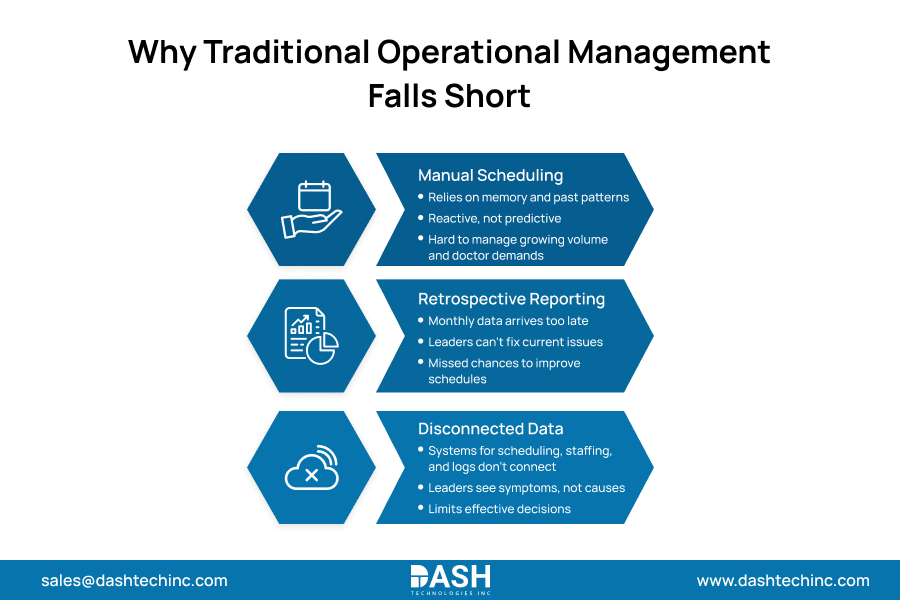
Traditional cardiology workflow management often depends on manual processes and retrospective review. That worked better in lower-volume, less data-intensive environments, but it struggles in modern cath lab operations. Healthcare operational analytics at traditional maturity levels create three specific, recurring failure modes.
- Manual scheduling is one limitation. Experienced coordinators often do well, but manual scheduling relies on patterns and memory. It tends to be reactive instead of using systematic forecasting. Managing becomes tougher when case volumes increase, procedural mixes shift, or many doctors vie for scarce room time.
- Retrospective reporting is another problem. Monthly utilization reviews may show that block use was low or turnaround times increased, but they do not help leaders intervene in time to fix this week’s schedule. By the time the trend appears in a traditional report, the opportunity to act has already narrowed.
- Disconnected operational data adds another challenge. Scheduling, staffing, procedure logs, and throughput data often live in different systems. Without connected visibility, leaders can see symptoms without seeing the full cause.
Make Cath Lab Operations Work Smarter
Transform disconnected workflows into intelligent systems—improving utilization, reducing delays, and supporting better clinical outcomes.
Optimize Your OperationsHow Predictive Analytics Improves Cath Lab Utilization?
Predictive analytics in cardiology uses historical and real-time operational data to forecast procedure demand, optimize scheduling, and identify workflow bottlenecks before they occur. This enables hospitals to shift from reactive to proactive cath lab management.
These algorithms calculate exact procedural durations by correlating individual surgeon performance, patient comorbidities, and specific intervention types. This strict visibility empowers leadership to precisely forecast demand and dynamically optimize surgical scheduling blocks.
Advanced modeling isolates impending workflow bottlenecks prior to operational impact. Flagging high-probability schedule overruns allows clinical directors to preemptively adjust staffing configurations, directly preventing expensive overtime and preserving procedural margins.
Key Metrics for Monitoring Cath Lab Performance
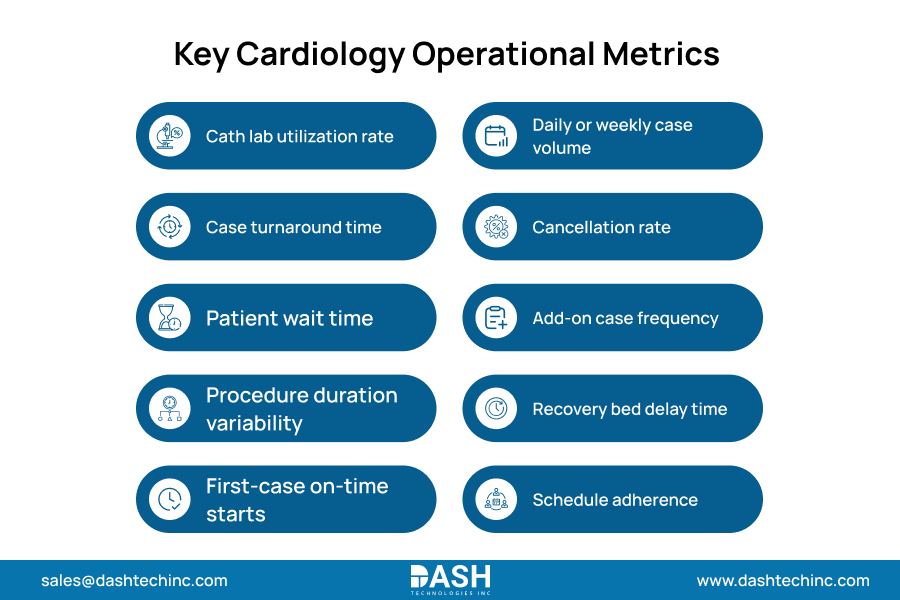
You cannot optimize what you do not measure. A successful predictive strategy requires a relentless focus on core cath lab performance metrics and broader cardiology operational metrics.
- Utilization Rate: Productive room time as a percentage of available scheduled hours, tracked daily by room, physician, and case type to identify specific patterns rather than aggregate performance
- Case Turnaround Time: Time between procedure completion and next case start, encompassing room cleaning, equipment preparation, and patient transport, the compounding factor that separates high-utilization labs from average ones
- Patient Wait Time: The duration a patient spends in the pre-op holding area waiting for their delayed procedure to begin; a massive driver of patient dissatisfaction.
- Procedure Duration Variability: The delta between the scheduled block time and the actual “wheels-in to wheels-out” time.
For the dashboard-related strategy, see Why Cardiology Departments Need Integrated Clinical and Financial Dashboards.
Benefits of Predictive Analytics for Cardiology Operations
Transitioning to algorithmic management dictates absolute cardiology operational efficiency. Executing enterprise healthcare predictive analytics generates immediate, compounding structural advantages:
- Rigorous Capacity Planning: Algorithmic volume forecasting permanently replaces seasonal assumptions, dictating exact facility expansion and specialized staffing requirements.
- Accelerated Patient Throughput: Enforcing strict procedural scheduling instantly eliminates clinical delays, directly improving HCAHPS scores and driving market access.
- Optimized Resource Allocation: Precise operational forecasting ensures high-cost inventory, including structural heart valves, and premium clinical personnel are deployed efficiently, permanently eliminating supply chain and expensive labor waste.
- Expanded Procedural Volume: Increased procedure volumes follow from eliminating the scheduling gaps and turnover inefficiencies that reduce daily case capacity. When each room reaches its maximum productive case volume without compromising quality or safety, the cardiology program captures the revenue potential of its physical and human capital.
Implementing Predictive Analytics in Cath Lab Management
Implementing predictive analytics in cath lab operations requires a structured, data-driven approach:
- Integrate Operational Data Sources: Combine scheduling systems, EHR data, staffing information, and procedure logs into a unified data layer.
- Analyze Historical Procedure Patterns: Identify trends in case duration, peak demand periods, and bottlenecks affecting throughput.
- Deploy Predictive Models: Use analytics tools to forecast procedure volumes, optimize scheduling blocks, and simulate operational scenarios.
- Enable Real-Time Monitoring: Track utilization, delays, and performance metrics continuously through dashboards.
- Continuously Optimize Workflows: Refine scheduling strategies and resource allocation based on ongoing insights.
Conclusion: Predictive Analytics Drives Cath Lab Performance
Catheterization labs dictate the fundamental clinical and financial viability of cardiovascular programs. Suboptimal utilization immediately degrades facility throughput, restricts patient access, and destroys revenue while exhausting highly specialized clinical teams.
Deploying predictive analytics permanently eliminates operational variance. Executing a strict cardiology operational strategy transforms raw facility data into actionable, high-velocity foresight. By accelerating volume forecasting and isolating workflow bottlenecks prior to impact, executives achieve absolute cath lab optimization, seamlessly aligning high-acuity clinical care with uncompromising financial performance.
Your cath lab may have more capacity than you think find out where you’re losing efficiency
Frequently Asked Questions
About Dash

Dash Technologies Inc.
We’re technology experts with a passion for bringing concepts to life. By leveraging a unique, consultative process and an agile development approach, we translate business challenges into technology solutions Get in touch.