Domain
Healthcare Data & Clinical Automation
Platform
AI-Driven Diagnostic Platform
Services
- Clinical Workflow Modeling Digitization
- Structured Assessment Engine Development
- AI-Based Clinical Report Generation
- Offline-First Sync Architecture Engineering
- HL7/FHIR-Ready API Data Architecture
Overview
A leading diagnostic provider in South Florida set out to modernize its digital swallowing assessment workflow—traditionally driven by paper forms, manual scoring, and time-consuming report creation. Dash Technologies partnered with the organization to design a clinician-friendly, AI-enabled platform that supports assessment scheduling, structured digital forms, offline functionality, and automated clinical reporting powered by ChatGPT.
The result is a cross-device diagnostic software (Windows executable + tablet app) that functions as an offline-enabled healthcare app, streamlining assessments end-to-end, improving documentation quality, and establishing a modern foundation ready for EHR/FHIR interoperability.
About the Client
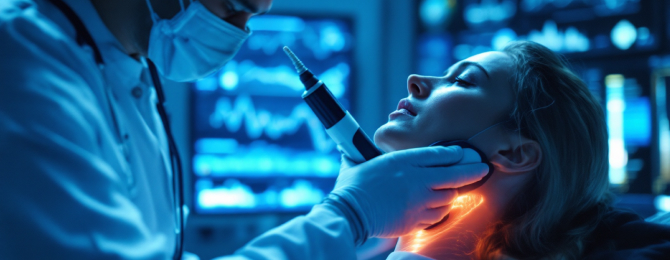
A South Florida–based dysphagia evaluation provider offering portable diagnostic services and office-based assessments, including MBSS and FEES. As a mobile healthcare diagnostics organization, they support multiple facilities and a large geriatric population with timely, on-site evaluations to reduce aspiration risks.
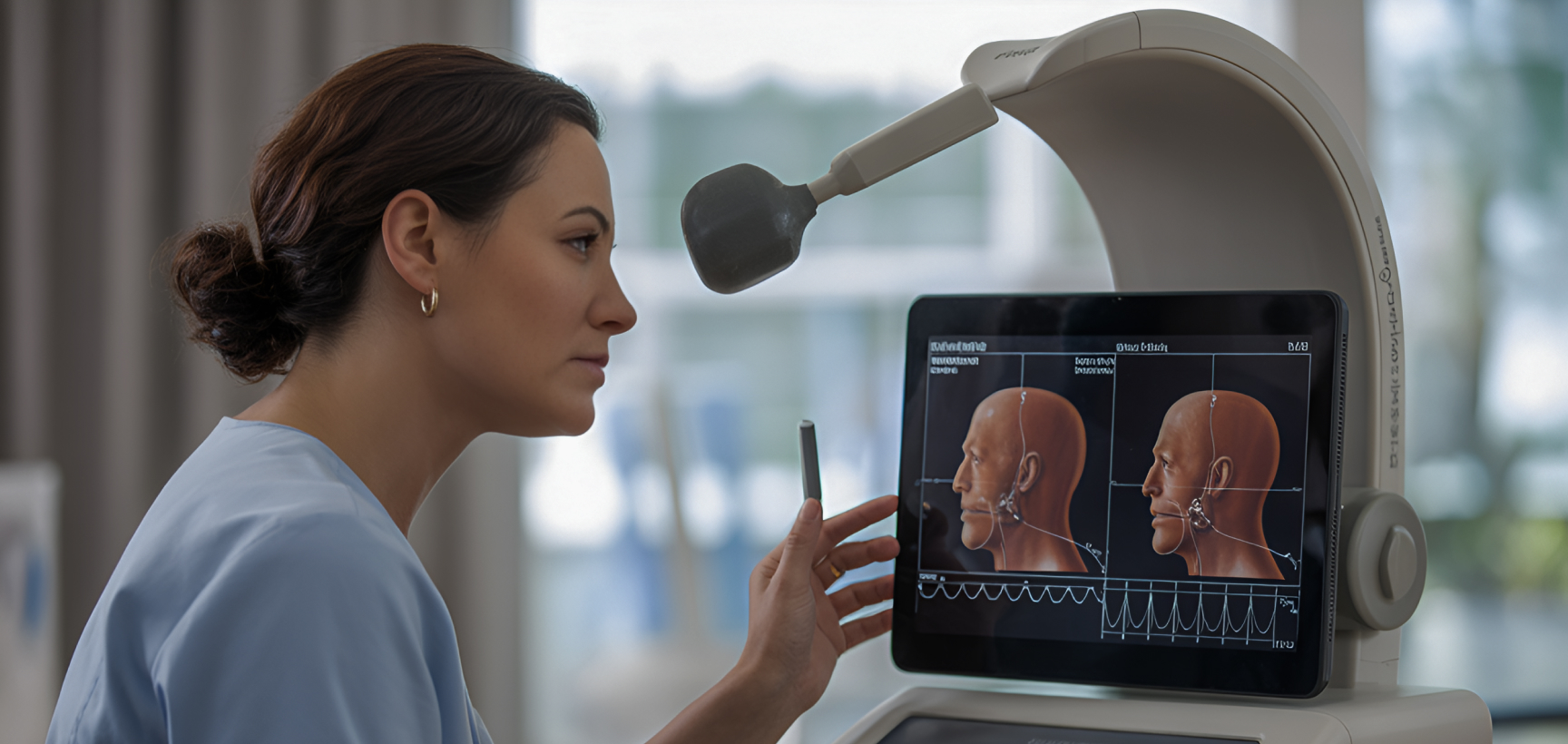
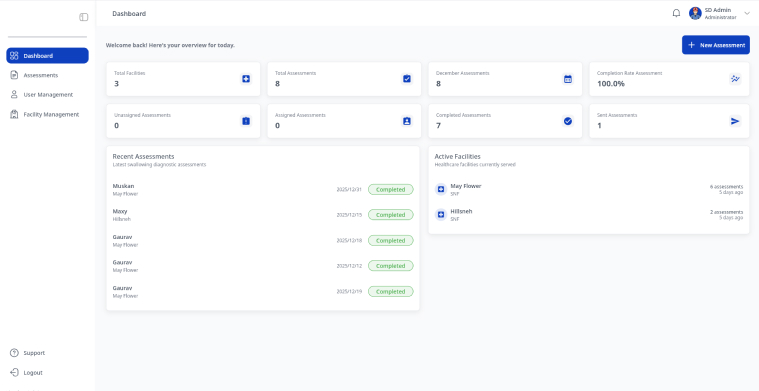
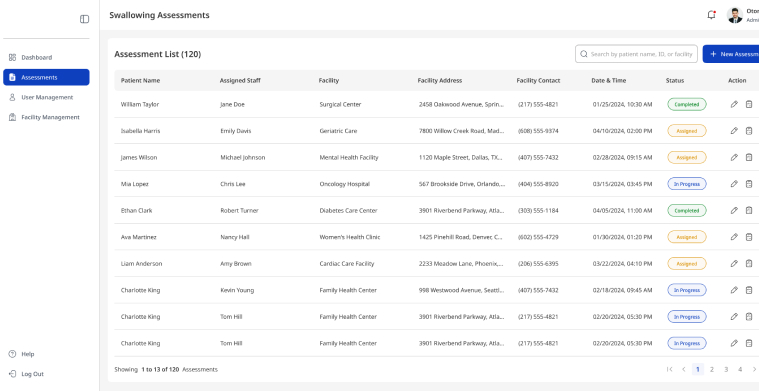
A fragmented, paper-driven dysphagia workflow was re-engineered into a structured, AI-operable clinical system.
Business Challenges
The client needed to modernize a paper-heavy, multi-facility workflow that slowed clinicians, limited scalability, and created documentation inconsistencies across mobile diagnostic teams.
-
Manual, Paper-Based Assessments
Slowed evaluations and created inconsistent clinical documentation.
-
Lengthy, Manual Report Writing
Clinicians spent excessive time converting notes into structured reports.
-
Disconnected Scheduling & Patient Records
Lack of a unified system led to duplication and operational delays across facilities.
-
No Offline or Cross-Device Support
Connectivity issues and device limitations disrupted on-site assessments.
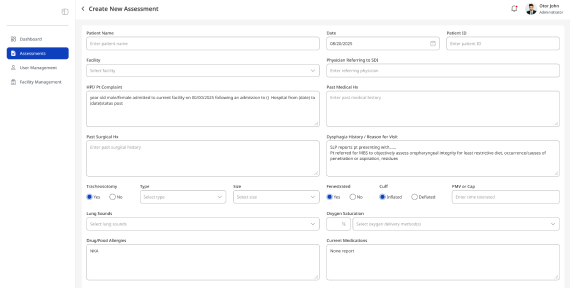
Offline-first architecture ensures uninterrupted diagnostics across mobile and low-connectivity environments.
Solution
Dash shaped the engagement as a structured, multi-phase journey—ensuring clinical accuracy, reliable offline performance, and seamless AI integration while building toward a scalable diagnostic platform. Each phase delivered tangible value for clinicians and set the foundation for long-term interoperability.
Phase 1 - Discovery, UX Mapping & Technical Architecture
Objectives
Clarify real-world clinical workflows, digitize paper assessments without disrupting practice patterns, and establish a FHIR-ready software design for an offline-capable, cross-device platform.
Key Workstreams
- Mapped MBSS/FEES workflows, including assessment phases, consistencies, and PAS scoring.
- Converted paper-based templates into structured digital schemas aligned with clinician terminology.
- Conducted iterative UX prototyping sessions to deliver a clinician-first UX design optimized for tablets and Windows environments.
- Defined an interoperable healthcare architecture supporting offline operation and future EHR/FHIR integration.
Technical Decisions & Rationale
- Flutter Web: Single codebase packaged as a Windows executable and tablet-ready app.
- Auth0 RBAC: Ensured robust identity, session control, and role permissions across mobile teams.
- Offline-first design: Local caching, conflict handling, and background synchronization.
- Structured assessment architecture: JSON-driven forms allow rapid configuration and future scale.
Outcome
- A clinically intuitive, offline-capable framework that mirrors real-world assessment flow while preparing the platform for advanced automation.
Phase 2 - Core Feature Build, AI Reporting & Workflow Automation
Objectives
Build the operational backbone of the platform—scheduling, assessments, patient records—and introduce AI-powered clinical report generation using ChatGPT.
Key Workstreams
- Developed a centralized, multi-facility scheduling system supporting clinicians, facilities, and mobile teams.
- Engineered a structured assessment engine to capture phases, consistencies, scoring, and clinical observations.
- Integrated ChatGPT clinical reporting to convert structured inputs into polished, standardized reports.
- Implemented PDF export and SMTP-based secure email delivery for rapid report sharing.
- Added dashboards, notifications, and audit logs for operational oversight.
Technical Foundations
- AI integration pattern: Structured data → clinical prompt → ChatGPT → templated report → PDF.
- Backend logic: PHP service orchestration, message queues, and standardized reporting templates for consistency.
- Auditability: Each assessment step logged for traceability and compliance.
Outcome
- Clinicians’ complete assessments digitally and generate standardized reports in minutes—dramatically reducing administrative burden through automated dysphagia reporting.
Phase 3 - Deployment, Optimization & Scale Enablement
Objectives
Ensure seamless adoption in field environments, optimize performance for on-site diagnostics, and prepare the platform for future integrations.
Key Workstreams
- Packaged the Flutter Web application as Windows diagnostic software, optimized for tablet use.
- Ran performance tuning on offline sync cycles, file handling, and load times in low-connectivity conditions.
- Delivered clinician training and support workflows to ensure rapid adoption.
- Implemented data archival, enhanced caching, and improved routing logic for multi-facility scheduling.
Technical Enhancements
- Sync optimization: Reduced conflicts and improved background reconciliation times.
- PWA techniques: Faster startup, caching strategies, and smoother offline transitions.
- Scalability improvements: Prepared APIs for HL7/FHIR modules in future phases.
Outcome
- A production-ready, clinician-tested platform deployed across devices—capable of supporting high-volume assessments with consistent performance and room to scale.
FHIR-ready foundations were built early, avoiding costly rework as interoperability requirements evolve.
Business Impact
Estimated outcomes based on workflow analysis and field feedback:
-
50% estimated reduction in reporting time with AI-driven clinical report generation
-
45% improvement in assessment turnaround, particularly across mobile teams and multi-facility schedules.
-
Zero paper dependency, eliminating manual errors, and lost documentation.
-
Higher clinician satisfaction due to intuitive UX and dramatically reduced administrative workload.
-
Improved data consistency from structured, standardized assessments.
-
Immediate scalability, allowing the organization to expand to new facilities with minimal onboarding.
The Dash Difference
Deep healthcare & MedTech expertise ensures accurate mapping of complex swallowing assessment workflows.
HL7/FHIR-ready architecture future-proofed the platform for EHR integrations.
Clinician-first UX reduced friction and supported immediate adoption.
AI-driven workflow automation cut reporting effort dramatically.
Offline-first engineering ensures reliability in low-connectivity environments.
Secure, modern infrastructure with Auth0, audit logs, and role-based permissions.
Agile, collaborative delivery enables rapid prototyping, testing, and refinement.
End-to-end ownership from discovery to deployment ensures continuity and quality
Related Case Study
See all Case Studies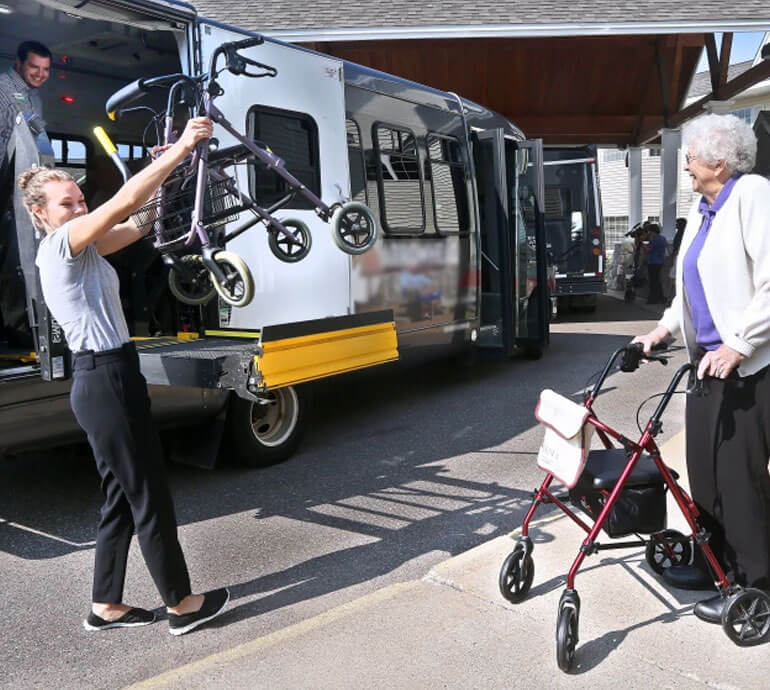
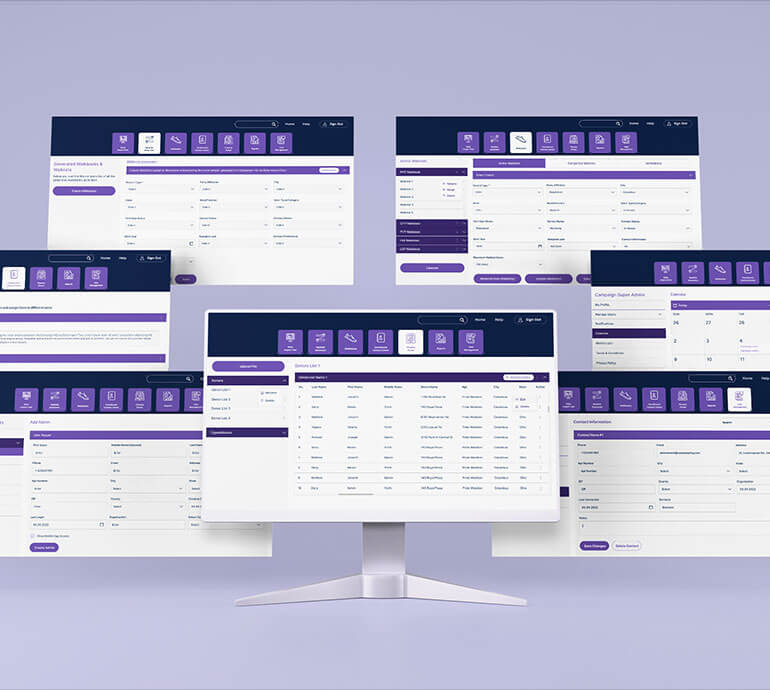
Have an Idea or Project? Let's Talk
Subscribe to Our Newsletter Here
Stay updated on the latest healthcare breakthroughs and research.
