Healthcare Technology Trends That Are Driving Hospital Transformation in 2026
The healthcare industry has permanently abandoned the debate over digital adoption. The current operational mandate dictates absolute execution speed. Hospitals and health systems are rapidly retiring from old infrastructure. This helps them achieve a full healthcare digital transformation. Surging patient expectations and strict regulatory mandates accelerate this inevitable shift.
Severe margin pressures demand facilities to accomplish more with fewer resources, forcing the immediate eradication of operational waste. Tracking dominant healthcare technology trends proves that enterprise technology functions as a true enabler only when governed by an uncompromising organizational strategy.
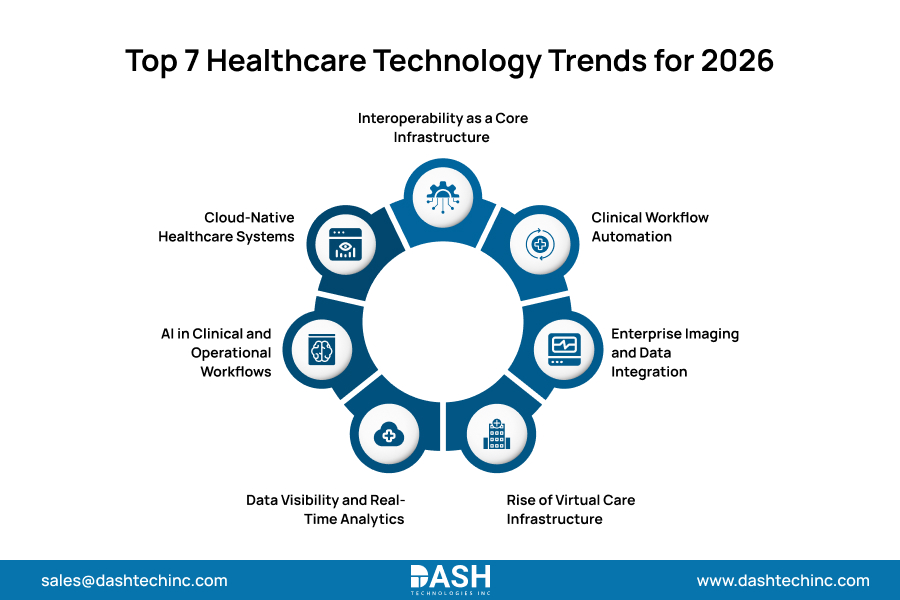
Trend 1: Interoperability as a Core Infrastructure
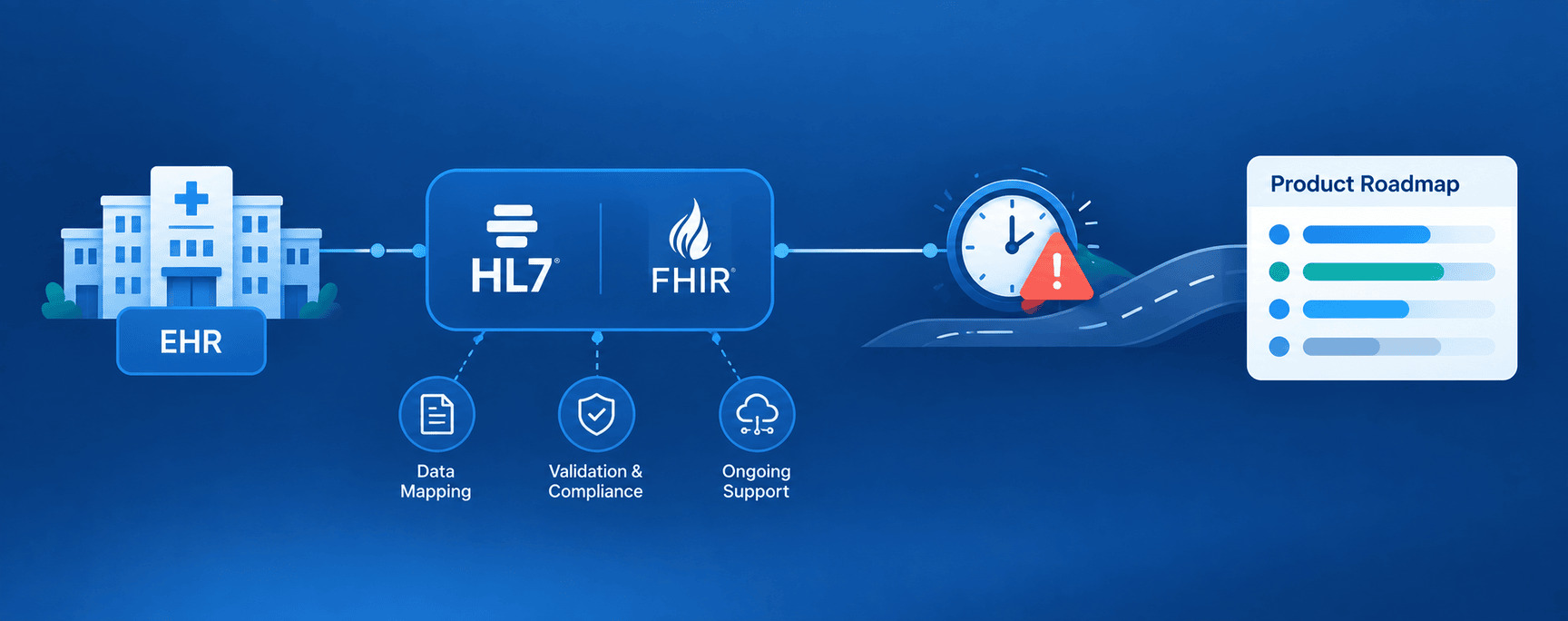
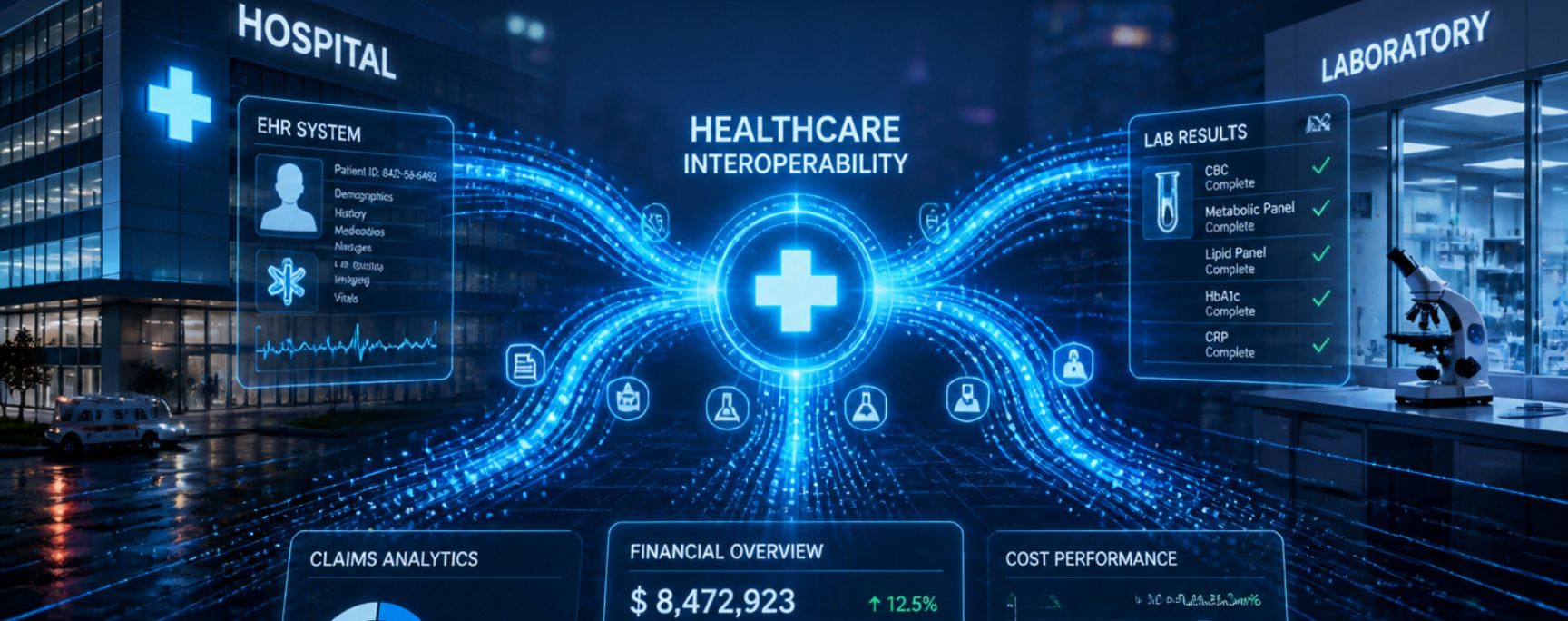
Executing strict healthcare interoperability no longer represents a basic regulatory checkbox. It operates as the foundational infrastructure required to run a modern health system. Legacy data silos isolating EHR systems, specialized providers, and payers previously generated massive clinical blind spots and physical disability medical decision-making. Today, deploying FHIR represents an uncompromising operational reality, with CMS regulations dictating absolute API integration for enterprise data exchange.
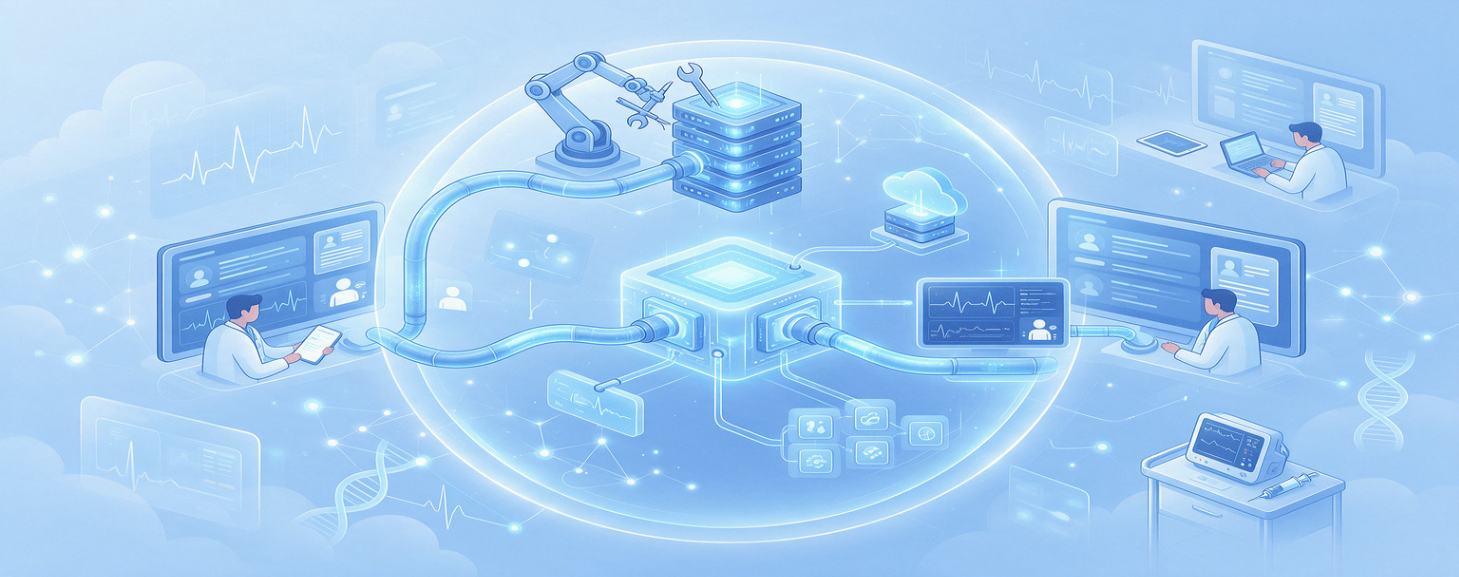
Hospital executives must mandate instantaneous data fluidity across previously isolated legacy systems. This structural integration actively eradicates duplicate testing, intercepts medical errors, and forces superior care coordination. Constructing this robust architecture demands a rigid phased deployment: establishing absolute operational baselines, architecting advanced API gateways, and overriding legacy fragmentation via middleware integration.
Explore: Why Hospital Interoperability Projects Fail And How to Fix Them
Trend 2: Clinical Workflow Automation
Severe clinician burnout operates as a massive operational liability. Executing targeted workflow automation healthcare initiatives systematically eliminate manual friction across prior authorizations, clinical documentation, discharge coordination, and scheduling optimization. The most dominant enterprise deployments expand far beyond basic administrative functions.
Deploying context-aware automation directly within core EHR workflows guarantees massive efficiency gains and total clinical adoption. Facilities enforcing mature automation programs secure immediate, quantifiable improvements in patient throughput, accelerated time to treatment, and a drastic reduction in physician documentation hours.
Trend 3: Enterprise Imaging and Data Integration
Imaging operations have expanded permanently beyond the radiology department to encompass cardiology, pathology, and oncology enterprise-wide. As clinical data volumes scale exponentially, executive leadership must pivot from basic acquisition to aggressive data integration. Forcing visual intelligence directly into baseline clinical workflows and the longitudinal patient record is strictly non-negotiable.
Deploying integrated platforms consolidates fractured departmental data, destroying legacy silos and guaranteeing immediate access exactly at the point of care. This structural alignment accelerates complex diagnoses, permanently eradicates redundant diagnostic testing, and drives absolute clinical unity. For organizations pursuing structural digital transformation, executing a comprehensive enterprise imaging strategy serves as the absolute IT requirement.
Imaging Shouldn’t Be a Bottleneck
DASH streamlines access, integration, and workflows—so clinicians spend less time searching and more time delivering care.
Talk to Our ExpertsTrend 4: Rise of Virtual Care Infrastructure
Basic telehealth video calls represent an obsolete pandemic-era artifact. The most critical healthcare technology trends mandate the immediate transition to fully integrated virtual care systems. These advanced architectures execute rigorous chronic condition management, continuous post-acute tracking, and complex remote hospital services.
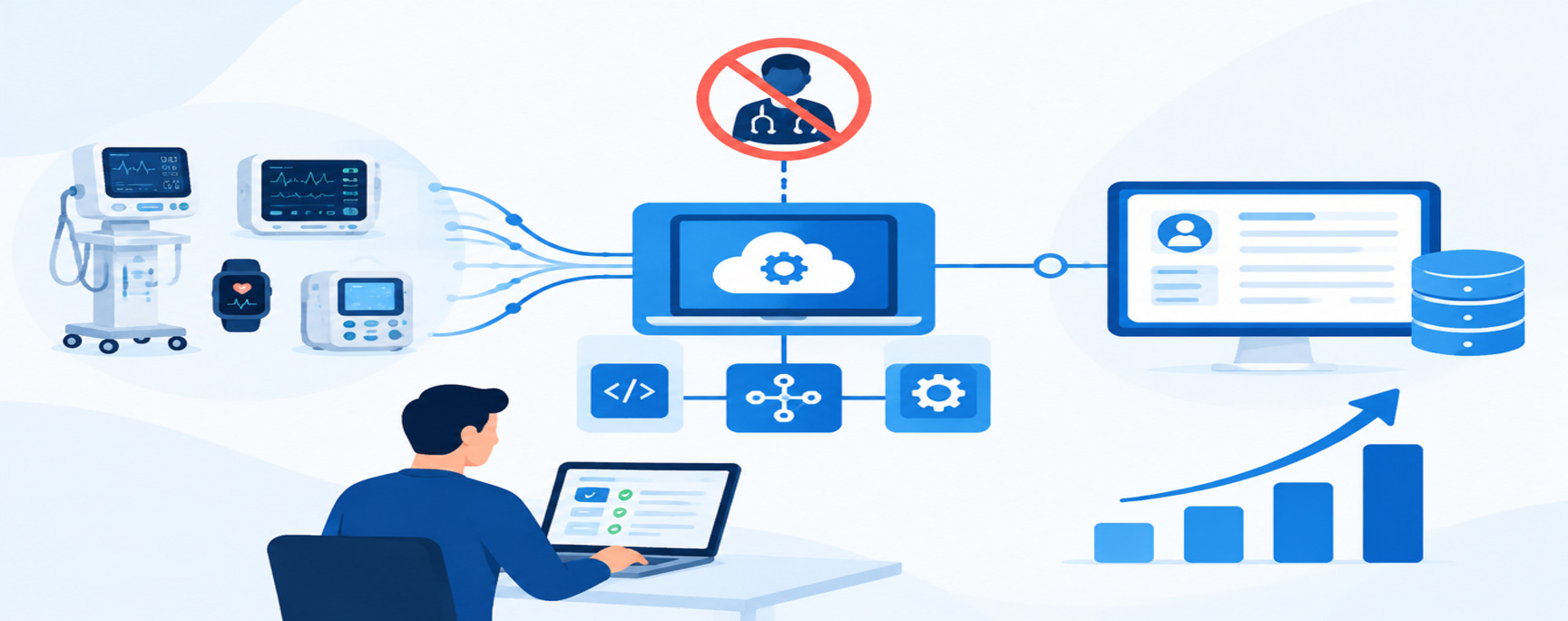
For health system executives, remote patient monitoring and connected wearables now function as mandatory operational standards rather than experimental pilots. This aggressive execution permanently relieves volume pressure on physical facilities while drastically expanding specialist access across underserved populations. Building this decentralized foundation needs strong connections. It links core EHRs, remote diagnostic devices, and enterprise scheduling. Advanced analytics platforms also play a key role. Each part must work well together.
Trend 5: Data Visibility and Real-Time Analytics
Executing critical medical and operational decisions based on delayed information represents unacceptable executive negligence. Advanced real-time healthcare analytics platforms provide the exact systemic visibility required to drive immediate, data-backed execution across the entire enterprise network.
- Proactive Command: Implementing live executive dashboards to track patient flow, precise bed utilization, and exact staffing metrics forces proactive operational command rather than reactive crisis management.
- Embedded Intelligence: Forcing these advanced platforms directly inside core EHR workflows guarantees instantaneous clinical decision support at the point of care.
- Acuity Escalation: For critical service lines like cardiology, absolute data visibility ensures immediate clinical escalation; the exact second physiological anomalies emerge.
Trend 6: AI in Clinical and Operational Workflows
Artificial intelligence has completely abandoned the experimental phase. Executing advanced AI in healthcare operations now represents a critical enterprise requirement actively scaling across leading facilities.
- Clinical Precision: Diagnostic algorithms structurally accelerate interpretation speed and enforce absolute diagnostic accuracy.
- Decision Support: Advanced platforms actively dictate oncology treatment pathways, patient triage, and precise scheduling protocols.
- Operational Command: These algorithms strictly govern facility staffing, predict acute volume surges, and eradicate the administrative friction directly causing clinician burnout.
This infrastructure fundamentally amplifies clinical teams without displacing critical human expertise.
Trend 7: Cloud-Native Healthcare Systems
Advanced healthcare cloud infrastructure dictates the future of enterprise clinical IT. Traditional on-premises systems severely restrict operational growth. Cloud native platforms are structurally designed to force limitless scalability, immediate flexibility, and continuous integration, allowing hospitals to launch new operational capabilities rapidly without absorbing massive hardware costs.
These platforms empower health systems to scale capacity dynamically, launch new care sites immediately, and rapidly integrate acquired medical practices. Cloud environments structurally enhance interoperability by streamlining the deployment of strict FHIR APIs. Best cloud providers deliver impenetrable HIPAA-compliant environments featuring automated threat detection and advanced encryption, massively outperforming the compromised security posture of aging legacy infrastructure.
What These Trends Mean for Healthcare Providers?
Isolated technology adoption generates fragmented returns. Unified execution of these trends engineers in the absolute architectural blueprint for future-ready healthcare facilities. This precise alignment guarantees three uncompromising operational outcomes:
- Operational Efficiency: Algorithmic automation and immediate data visibility systematically eradicate the administrative friction currently stalling care delivery and destroying margins.
- Infinite Scalability: Native cloud infrastructure, strict FHIR interoperability, and robust virtual platforms dictate limitless organizational growth without demanding structural rebuilds.
- Financial Dominance: Eradicating administrative waste and redundant diagnostic protocols directly forces uncompromising financial sustainability.
Executing a good hospital transformation strategy completely rejects isolated IT purchasing. It demands architecting a ruthlessly connected ecosystem where every technological capability actively multiplies the force of the entire network.
How Providers Are Adapting to These Changes?
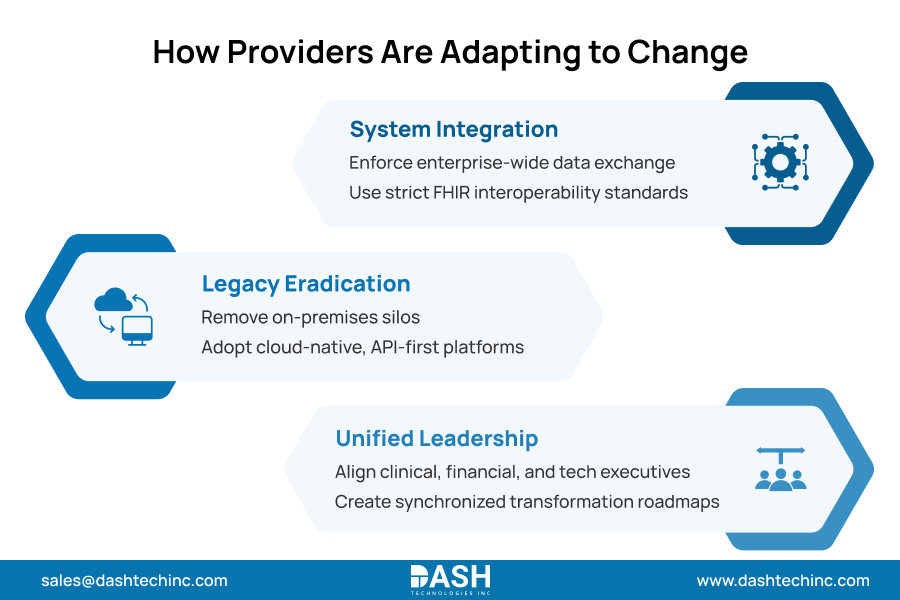
Fragmented technology adoption guarantees systemic failure. Best health systems respond to modern market pressures by executing uncompromising platform modernization. Elite organizations aggressively pursue two parallel operational tracks:
- System Integration: Mandating comprehensive enterprise data exchange through rigid FHIR interoperability standards.
- Legacy Eradication: Achieving total platform modernization by destroying on-premises silos in favor of highly scalable, cloud-native, and API first systems.
Executing this structural shift requires absolute synchronization between clinical, financial, and technology executives. Forging unified transformation roadmaps guarantees advanced capabilities to generate immediate operational ROI while sustaining unbreakable long-term adoption.
Conclusion
Acquiring software never guarantees hospital transformation. Total operational dominance occurs only when leadership deploys specific technology through an uncompromising strategy, forcing native alignment with clinical workflows and absolute enterprise integration.
The seven major healthcare technology trends represent foundational building blocks. These assets deliver measurable returns exclusively when assembled through deliberate architectural design. Build a strictly future-ready clinical framework. Connect with Dash Technologies today.
Frequently Asked Questions
About Dash

Dash Technologies Inc.
We’re technology experts with a passion for bringing concepts to life. By leveraging a unique, consultative process and an agile development approach, we translate business challenges into technology solutions Get in touch.