How Digital Health Platforms Are Reducing Reporting Delays in Radiology?
Radiology reporting delays slow critical clinical decisions and disrupt hospital throughput. Modern digital health radiology platforms reduce imaging report turnaround time through workflow automation, real-time visibility, and intelligent case prioritization. It can’t keep up with the large number of patients. Doctors use these files to schedule surgeries, adjust cancer treatments, manage ER trauma cases, and discharge patients efficiently. If the report is late, medical care stops.
These delays hurt the entire hospital system. They tie up valuable inpatient beds and frustrate both physicians and patients. Modern tech platforms are finally fixing these radiology workflow challenges by forcing actual radiology workflow optimization and showing managers exactly where files get stuck in real time.
To understand how structured imaging data enables transformation, read our guide on Why Radiology Data Is the Backbone of Digital Health Transformation.
Why Reporting Delays Are Common in Radiology Departments?
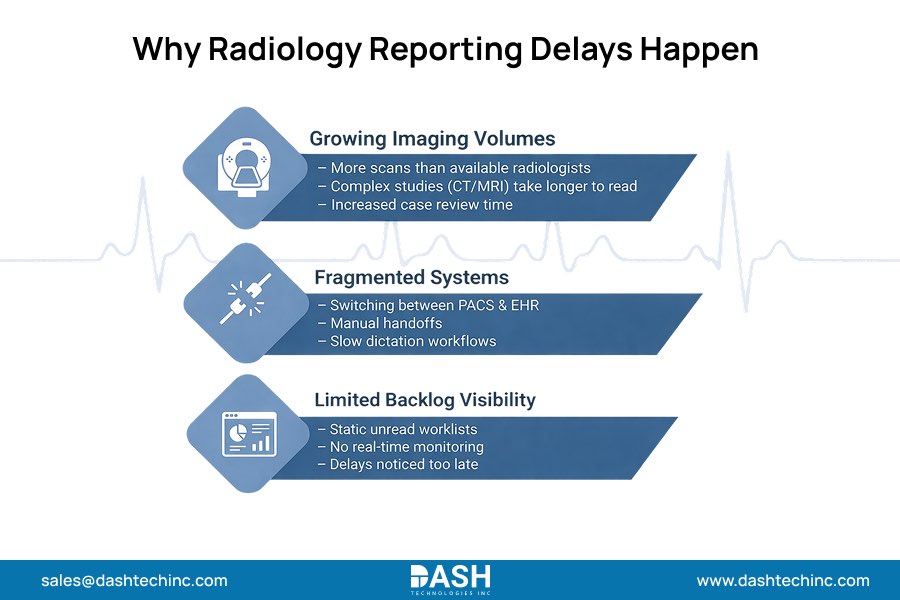
Hospital leaders must identify the exact causes of radiology reporting delays. This step is crucial before attempting to improve the entire process. Imaging departments are already overwhelmed. The breakdowns often stem from three main operational issues. These radiology workflow inefficiencies are among the most common causes of radiology reporting delays.
- Growing imaging volumes and case complexity
Rising imaging volumes combined with complex multi-slice studies significantly increase reporting turnaround time. Modern scans like multi-slice CTs and functional MRIs produce thousands of individual images per study. It simply takes a doctor much longer to review a single case now than it did ten years ago. - Fragmented systems and manual handoffs
Radiologists waste time switching between PACS and the main health record. This back and forth slows them down. Add clunky dictation software to the mix, and the workflow completely stalls. When a doctor logs into a new window or waits for a tech to send an image, they waste time. That’s time they could spend reading scans. - Limited visibility into reporting backlogs
In many hospitals, the unread study list is just a static queue. Managers cannot see when a specific area, like neuroradiology, falls behind until the backlog is already out of control.
The Impact of Radiology Reporting Delays on Care and Operations
Reporting delays are more than just operational issues. Radiology turnaround time impact hits hard on multiple fronts. They pose clinical and financial risks. Prolonged radiology turnaround time increases length of stay, reduces patient throughput, and directly impacts hospital revenue cycles.
- Delayed diagnoses and treatment decisions: When doctors wait hours for scan results, they must delay care. Reporting delays are not simply operational inconveniences—they represent measurable clinical and financial risk.
- Clinician frustration and rework: When referring doctors cannot find a report, they call the radiology desk directly or constantly refresh their screens. Sometimes they just guess and make medical decisions without the scan. This wastes the time of everyone who is involved.
- Operational inefficiencies and capacity constraints: A backed-up radiology department creates downstream bottlenecks. Emergency room waits are longer. Admitted patients stay in beds too long because they can’t get discharged. Outpatient schedules also fall apart. Imaging workflow bottlenecks cause massive bed shortages across the hospital.
Why Traditional Approaches Fail to Fix Reporting Delays?
Traditional radiology workflows rely heavily on manual reporting processes without real-time workload intelligence. Without analytics-driven insight, adding staff increases cost but does not improve systemic efficiency.
A new radiologist or technician costs a fortune and does not connect the fragmented software they have to use. Looking at a spreadsheet of last month’s turnaround times does zero good for a patient waiting for an MRI result right now. If you lack real-time workload visibility, department managers are just guessing how to hand out the daily cases. One doctor ends up buried in scans while another sits around waiting for files to load.
Learn more about modern radiology data integration strategies and workflow optimization approaches here.
How Digital Health Platforms Improve Radiology Reporting Workflows?
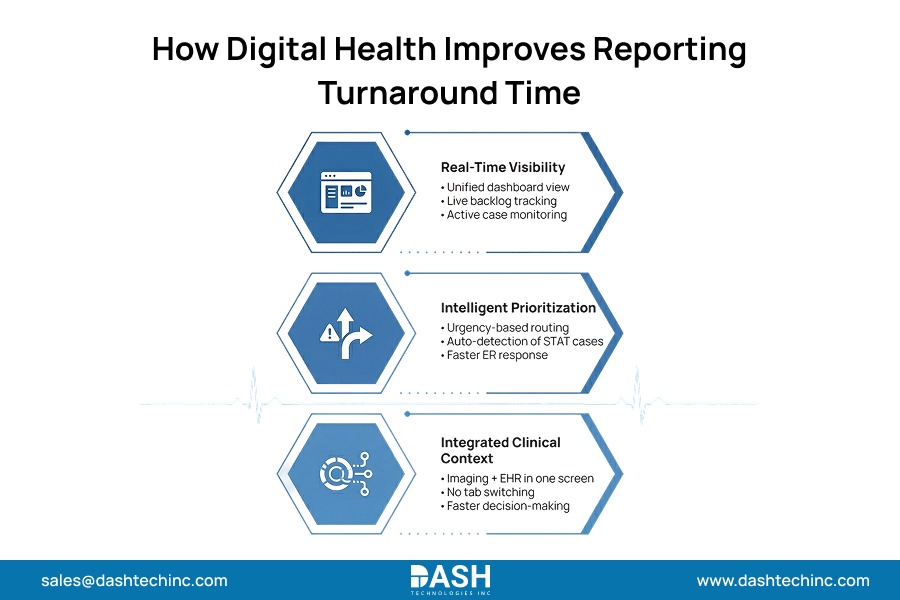
Digital health platforms radiology solutions address reporting delays through radiology workflow automation that builds intelligence directly into daily operations.
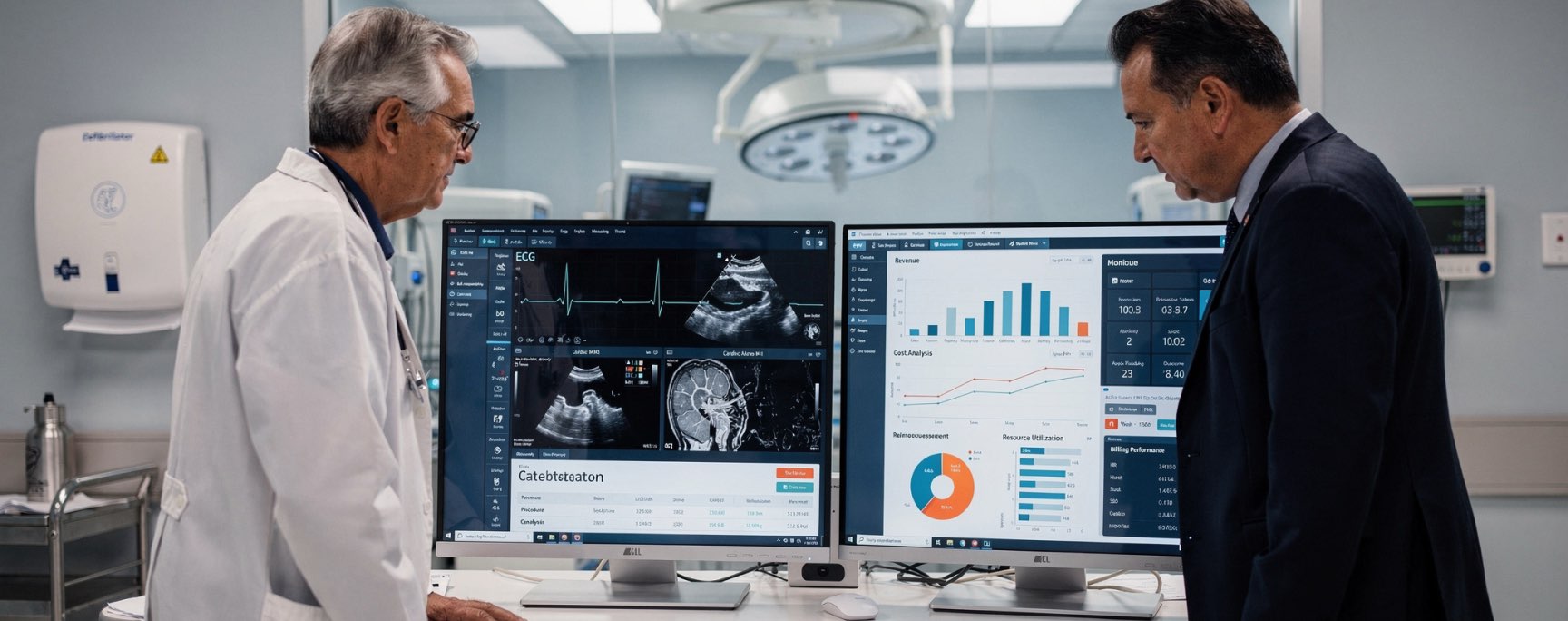
- Real-time visibility into worklists and backlogs: Modern radiology analytics platforms embed intelligence directly into workflow operations. Real-time dashboards reduce average reporting turnaround time by identifying backlog risks before SLA breaches occur.
- Intelligent routing and prioritization: The system doesn’t let doctors just pick the oldest file. Instead, it assigns tasks based on their urgency. The software reads the patient’s electronic record and catches emergency trauma orders automatically. automatically prioritizes high-acuity studies in the radiologist’s active worklist. The ER doctor gets the answer in minutes so they can operate.
- Integrated access to imaging and clinical context: Connecting the storage system directly to the main health record puts everything on one monitor. Radiologists do not have to dig through separate tabs to find a patient’s old lab results or surgery notes. The clinical history sits right next to the scan.
Key Capabilities That Reduce Reporting Turnaround Time
Radiology reporting optimization depends on specific platform capabilities that address core delay drivers.
Key features include:
- Automated case prioritization based on urgency : Ensures high-risk studies are reported within clinically defined time thresholds.
- Workload balancing across radiologists and sites : Prevents uneven case distribution that increases reporting delays.
- Alerts for delayed or high-risk cases : Enables proactive intervention before turnaround KPIs are missed.
- Analytics on turnaround time trends by modality
- Visibility into daily and weekly backlog patterns
- Performance benchmarking across teams
Imaging workflow analytics enables continuous refinement of reporting processes rather than one-time adjustments.
Improve Radiology Reporting Performance
Discover how digital health and analytics platforms reduce imaging report delays and improve turnaround time.
Explore Radiology Workflow SolutionsMeasuring the Impact of Reduced Reporting Delays
Leading radiology analytics platforms track the following reporting turnaround KPIs: You have to track your new software to see if it actually works. If you want to prove the upgrade was worth the money, you need hard radiology performance metrics. Managers can finally see actual progress when they monitor reporting turnaround KPIs directly inside the system.
Focus entirely on these metrics:
- Report Turnaround Time (TAT): It measures the time from when the scanner acquires the image. It continues until the physician signs the final report.
- Backlog Volume: The total number of unread files sitting in the queue when the shift ends.
- Modality-Specific Delays: Checking if your MRI reads take significantly longer than your X-rays, so you know exactly where you need to hire specialists.
- SLA Adherence: The percentage of STAT, Urgent, and Routine cases that are read within their medically defined, acceptable time windows.
These metrics allow leadership teams to quantify the operational and financial impact of reduced radiology reporting delays.
Preparing Radiology Departments for Digital Workflow Transformation
Successful radiology digital transformation requires both technology alignment and organizational change management.
Radiology digital transformation and imaging workflow modernization fail if you just buy new software and hope for the best. You have to map out exactly how your staff actually works right now before you try to change their daily routine.
- Assess current reporting workflows: Map out the exact path from the scanner to the final report. Find every manual handoff, software switch, and wasted click that slows doctors down.
- Identify delay drivers across modalities: Look at your existing data to find the worst bottlenecks. Figure out if the delays happen during specific night shifts, in certain departments like MRI, or at specific points in the software.
- Integrate imaging, reporting, and analytics systems: Connect the storage servers, dictation software, and patient records. Radiologists need one screen to work on, and managers need one dashboard to watch the queue.
- Use data to continuously optimize turnaround time: Set hard baselines for turnaround times.
Monitor reporting turnaround KPIs weekly to ensure sustained workflow optimization.
Conclusion: Faster Radiology Reporting Starts With Smarter Platforms
Radiology workflow optimization through digital health platforms transforms reporting from a bottleneck into a measurable performance advantage.
In the modern healthcare environment, reporting speed is fundamentally a quality indicator. If diagnostic results sit in an unread queue, patient treatment simply stops. Using digital health in radiology removes the software and administrative bottlenecks that create these dangerous wait times. Better platforms force actual radiology workflow optimization. This lets doctors do their actual jobs and read the scans instead of fighting a broken IT system.
Stop dealing with imaging bottlenecks and late reports. Explore Radiology Workflow Solutions to build a custom analytics platform that actually works for your department.
Frequently Asked Questions
About Dash

Dash Technologies Inc.
We’re technology experts with a passion for bringing concepts to life. By leveraging a unique, consultative process and an agile development approach, we translate business challenges into technology solutions Get in touch.